




This year's commemoration carries unusual weight. The African Union has launched the Decade of Reparations for Africans and People of African Descent (2026–2036), a ten-year continental campaign for historical redress and structural transformation. Yet Africa Day cannot be reduced to flags, parades and diplomatic rhetoric. It must become a continental moment of truth, because Africa stands at the intersection of extraordinary opportunity and profound vulnerability.
A rich continent with poor outcomes
No region holds greater strategic importance in the twenty-first-century economy than Africa. The continent holds an estimated 30 %of the world's known mineral reserves, more than 70% of global cobalt, roughly 40%of its manganese, and major lithium, graphite, copper, bauxite, platinum, uranium and rare-earth deposits. It contains around 60% of the world's uncultivated arable land and immense solar and hydro potential. Africa is becoming central to the global energy transition, electric-vehicle supply chains, artificial-intelligence infrastructure and food security itself.
And yet the continent remains trapped in a paradox of abundance without prosperity. Sub-Saharan Africa now accounts for roughly seven in ten of the world’s poorest countries, with extreme poverty affecting about 46 percent of the region's population, a share that has been revised upward, not down, in the World Bank's most recent assessments. Around 600 million Africans, nearly two of every five people, still live without electricity, and one billion lack access to clean cooking, a deprivation linked to some 815,000 premature deaths in Africa each year. The continent contributes less than 4% of global greenhouse-gas emissions, yet it is among the regions most devastated by climate change.
Most damning of all: by United Nations estimates $89 billion leaves Africa every year through illicit financial flows; tax evasion, profit shifting, trade mis-invoicing, corruption and illegal extraction. That figure is roughly double the development assistance the continent receives. It is not merely an economic leak. It is a justice issue, and the missed schools, clinics, roads and power stations are its true cost.
Reparations beyond symbolism
This is why the AU's Decade of Reparations matters so profoundly. For too long, reparation has been narrowly framed as a cheque for past wrongs. Reparative justice is far broader: recognition of historical crimes, restitution of stolen heritage, reform of an unequal global financial system, debt justice, climate justice, fair taxation, equitable trade, and the restoration of Africa's full agency in global governance.
The economic foundations of several global powers were built substantially on slavery and colonial extraction. Between the 15th and 19th centuries, an estimated 12-15 million Africans were forcibly trafficked across the Atlantic; millions perished in capture, transport and resistance. Colonialism then institutionalized systems of extraction whose scars are still visible: fragile commodity-dependent economies, weak industrial bases, externally dependent finance, and artificial borders that still fuel instability.
The pattern persists in modern form. The Democratic Republic of Congo supplies the majority of the world's cobalt yet captures only a sliver of the electric-vehicle battery value chain. Côte d'Ivoire and Ghana produce much of the world's cocoa but earn only a fraction of the revenues of the global chocolate industry. Despite vast farmland, the continent spends approximately $100 billion a year importing food. Africa cannot keep exporting raw minerals while importing unemployment.
The youngest continent: Opportunity or time bomb?
Africa is the youngest continent on earth. More than 60%of Africans are under 25. By 2050, one in every four people on the planet will be African, the continent's population will approach 2.5 billion, and its working-age population will exceed those of China and India combined. This could become one of the greatest demographic dividends in human history, or one of its greatest political failures.
A demographic dividend is not automatic. It is earned only when young people are healthy, educated, skilled and met with real economic opportunity. Too many young Africans instead face unemployment, weak schooling, exclusion from decision-making and shrinking democratic space. Since 2014, more than 30,000 migrants have died or disappeared in the Mediterranean, with thousands more lost in the Sahara before ever reaching the sea. Young Africans are not fleeing because they hate Africa. They are fleeing because systems have failed to offer them dignity, security and hope.
Democracy under pressure, guns still unsilenced
Africa Day 2026 also arrives amid democratic fragility. Between 2020 and 2023 the continent saw a resurgence of military coups in Mali, Burkina Faso, Guinea, Niger and Gabon, while Sudan continues its descent into war. These ruptures reflect deeper crises: corruption, exclusion, constitutional manipulation, weak institutions and collapsing trust in leadership.
The move from the OAU, once dismissed as a “club of Heads of State,” to a people-centred African Union was meant to anchor the continent in shared values: democracy, human rights, constitutionalism, accountability and citizen participation. Yet the AU itself counts more than twenty active conflicts and crisis situations. Its flagship pledge to “silence the guns by 2020” was missed and pushed to 2030. The lesson is hard but simple: military operations alone will never bring peace. The roots of conflict lie in poverty, inequality, exclusion, failure to manage diversity and the unjust sharing of resources. Peace cannot be sustained without justice; security cannot exist without inclusion.
The reparative justice we rightly demand of the world also obliges us to account to our own people. A continent that asks others to redress historical theft cannot tolerate the contemporary theft of public resources within its own borders. African states must improve governance, confront corruption, and invest seriously in education, health and economic opportunity, while international partners support debt reform, the restitution of looted heritage and genuine trade and tax justice. Accountability cannot run in only one direction.
Africa and the new global scramble
Africa has once again become central to global competition. The United States, China, Russia, the European Union, the Gulf states, Türkiye, India and others are all deepening their strategic footprint. The contest is no longer only about oil; it is about critical minerals, green industrialization, digital infrastructure, logistics corridors and political influence. Without strategic coordination, the continent risks once more becoming an arena where outside powers compete and Africans capture little of the value.
The antidote is coordination, not dependency: stronger regional integration through the African Continental Free Trade Area, coordinated mineral diplomacy, African-led industrial policy and beneficiation, fairer taxation and coherent foreign-policy alignment. The African Union's admission as a permanent member of the G20 was a genuine geopolitical victory. African voices now shape debates on debt reform, climate finance and the governance of artificial intelligence. The task now is to convert that strategic weight into tangible gains for ordinary citizens.
From celebration to commitment
Since its founding, the African Union has raised the normative bar: treaties, charters, frameworks, the African Charter on Democracy, the African Peer Review Mechanism, the AfCFTA, and the seven aspirations of Agenda 2063. But norms alone will never deliver “the Africa We Want.” These instruments are not paperwork; they are promises made to our people, and they must be honored. It is time to close the gap between continental declarations and daily reality, and to ask honestly why 60% of the African Union's budget still depends on external partners, and what that means for its sovereignty.
Africa does not need pity. Africa does not need charity. Africa needs ethical leadership, courageous governance, strategic negotiation, fair partnerships and institutions willing to defend African interests. The Africa we want will not be built through speeches; it will be built through the implementation of adopted decisions and policy frameworks, citizen participation, continental solidarity, democratic renewal and economic transformation.
The future of Africa will not be decided in Washington, Beijing, Brussels or Paris. It must be imagined, negotiated, defended and built by Africans themselves. Africa Day is therefore not only a celebration of liberation achieved; it is a reminder of liberation unfinished: from dependency, inequality, corruption, extractive systems and the global structures that still marginalize African voices.
Happy Africa Day 2026!
Nkosi Sikelel’ iAfrika. God Bless Africa.
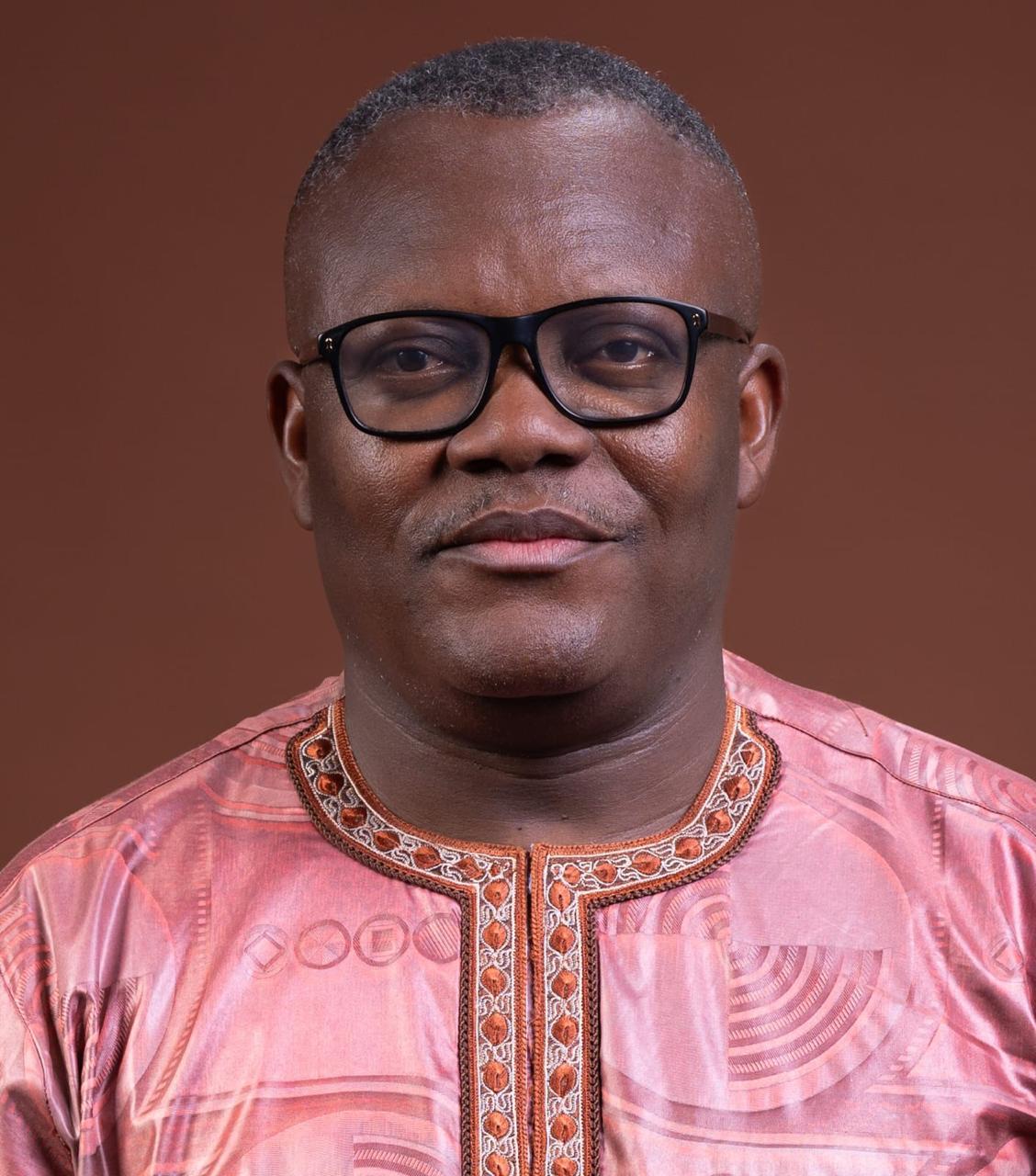
Desire Assogbavi is an advisor at Open Society Foundations.
Loading comments...
Leave a comment