




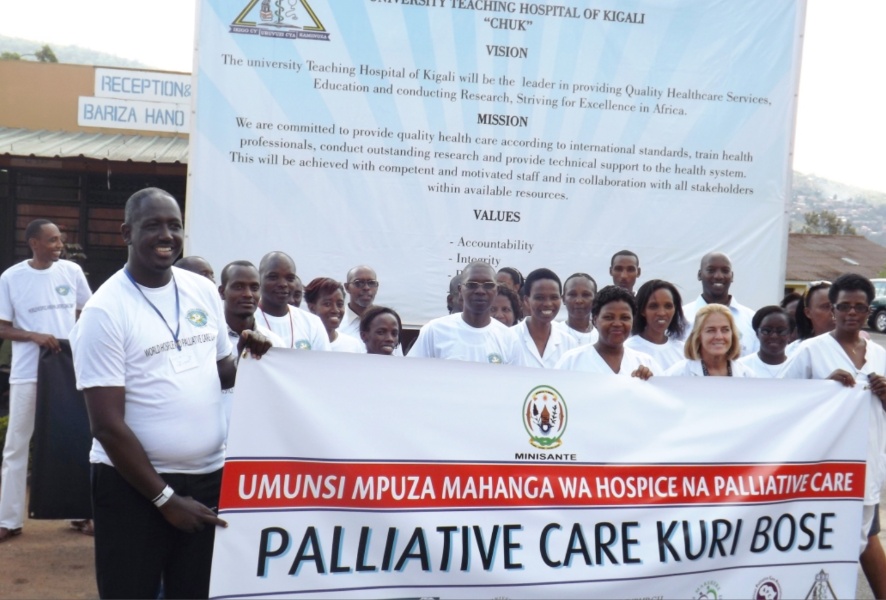
In homes and hospitals alike, families watch helplessly as a loved one suffers from advanced cancer, heart failure, kidney disease, or another life-limiting illness, knowing that cure is no longer possible but comfort remains out of reach.
This reality raises an urgent question: why palliative care?
Medicine has made remarkable progress in preventing disease, extending life, and restoring health. Yet one reality remains beyond its reach: death. A healthcare system should therefore be judged not only by how many lives it saves, but also by how compassionately it cares for those it cannot cure.
As Rwanda continues to strengthen one of Africa’s most respected healthcare systems, one essential area deserves greater attention: palliative care. Grounded in compassion, dignity, and respect for human life, palliative care relieves suffering, manages pain, and provides emotional, psychosocial, and spiritual support to people with life-limiting illnesses and to the families who care for them.
In Rwanda, and across much of Africa, the rising burden of cancer, heart disease, kidney failure, neurological disorders, and other chronic illnesses makes palliative care not only a healthcare priority, but a moral imperative.
Death is not the failure of medicine
Modern medicine often treats death as defeat. Families search for one more treatment, one more surgery, one more miracle. Healthcare professionals fight to preserve life because that is their calling. Yet there comes a point when curing is no longer possible.
At that moment, medicine must not end. When healing is beyond reach, caring becomes our greatest responsibility.
Palliative care recognizes that while we cannot always add more days to life, we can add comfort, dignity, peace, and meaning to the days that remain. It ensures that no person spends their final moments in unbearable pain, abandoned by the healthcare system, or isolated in fear. Death should never mean the end of compassion.
Behind every diagnosis is a human story. It is the mother with metastatic cancer who worries more about her children’s future than her own pain, and the father with advanced heart failure struggling to breathe while trying to remain strong for his family. It is the elderly grandparent enduring severe suffering because pain medication is unavailable, and the child with a terminal illness whose greatest wish is simply to be held by family rather than surrounded by machines.
These are not just medical cases; they are human lives deserving of dignity, comfort, and love. Palliative care reminds us that every person has inherent worth until their very last breath.
Rwanda’s journey and Africa’s reality
Rwanda has shown extraordinary leadership in rebuilding and strengthening its healthcare system through universal health coverage, community health workers, and equitable access to essential services. These achievements have become a model for many nations.
However, access to quality palliative care remains limited, especially in rural and underserved communities where healthcare resources are scarce. As life expectancy rises and non-communicable diseases become more common, thousands of Rwandans face prolonged illness marked by physical pain, emotional distress, financial strain, and caregiver exhaustion.
For many families, the greatest fear is not death itself, but watching a loved one suffer without relief. Palliative care addresses this suffering by controlling pain, managing symptoms, providing psychological and spiritual support, assisting caregivers, and helping patients spend their remaining days according to their values and wishes.
It also reflects a deeply rooted Rwandan tradition: the desire for loved ones to spend their final days surrounded by family, community, dignity, and peace. Community-based palliative care strengthens these values while delivering compassionate, evidence-based care.
Across the rest of the continent, the need for palliative care continues to grow under similar constraints. Access remains far below what is needed, with fewer than 5% of people who require these services able to receive them.
Millions suffer unnecessarily because of shortages of trained professionals, limited access to essential pain medications such as morphine, inadequate health financing, and the misconception that palliative care means giving up hope.
In reality, palliative care is not about surrender. It is about refusing unnecessary suffering, recognizing that every life retains value even when a cure is no longer possible, and keeping compassion at the center of healthcare.
The need for action
Improving access to palliative care requires leadership, investment, education, and public accountability. For Rwanda and other African countries, the next step is not simply to acknowledge the need, but to implement clear, measurable actions with defined responsibilities and timelines.
First, governments must integrate palliative care into national policy and financing within 12 months. This requires including it in the essential health service package, assigning a national focal person, and creating a dedicated budget line so that palliative care is formally covered and funded under universal health coverage frameworks.
Second, the health workforce must be trained within 18 months by embedding palliative care competencies into pre-service and continuing education for clinicians, nurses, pharmacists, and social workers. This will ensure more providers can identify, treat, and refer patients earlier in their illness trajectory.
Third, regional supply chains must secure essential medicines within 12 months. Public health authorities need to strengthen procurement and distribution channels so that morphine and other crucial symptom-control medicines are consistently available in all district and referral hospitals, effectively eliminating stock-outs.
Fourth, infrastructure must expand to support community and home-based care within 24 months. By building formal referral pathways, supporting home visits, and equipping family caregivers with practical guidance and follow-up support, more patients can receive high-quality care at home.
Finally, stakeholders should launch national awareness campaigns within 6 to 12 months using local languages and trusted community channels to explain what palliative care is and when it should begin. This outreach must be paired with a national monitoring dashboard established within 12 months to track training, service coverage, medicine availability, home visits, and referral patterns to guide future planning and budgeting.
The final chapter of life deserves the same compassion, professionalism, and respect as its beginning. A peaceful death, free from unnecessary pain, fear, and abandonment, is not a privilege for a few; it is a fundamental human right.
Palliative care teaches us that even when medicine can no longer cure, it can still comfort; when it can no longer prolong life, it can still preserve dignity; and when words are few, compassion can still speak. In caring for those who are dying, we do not surrender to death; we honor life.
Rwanda has already shown the world what determined leadership can achieve in public health. It now has another opportunity to become a continental leader in ensuring that every person, regardless of age, income, or diagnosis, can live their final days with dignity, comfort, and hope. A nation’s healthcare system is measured not only by the lives it saves, but also by the humanity it extends to those whose journey is coming to an end.

Loading comments...
Leave a comment