



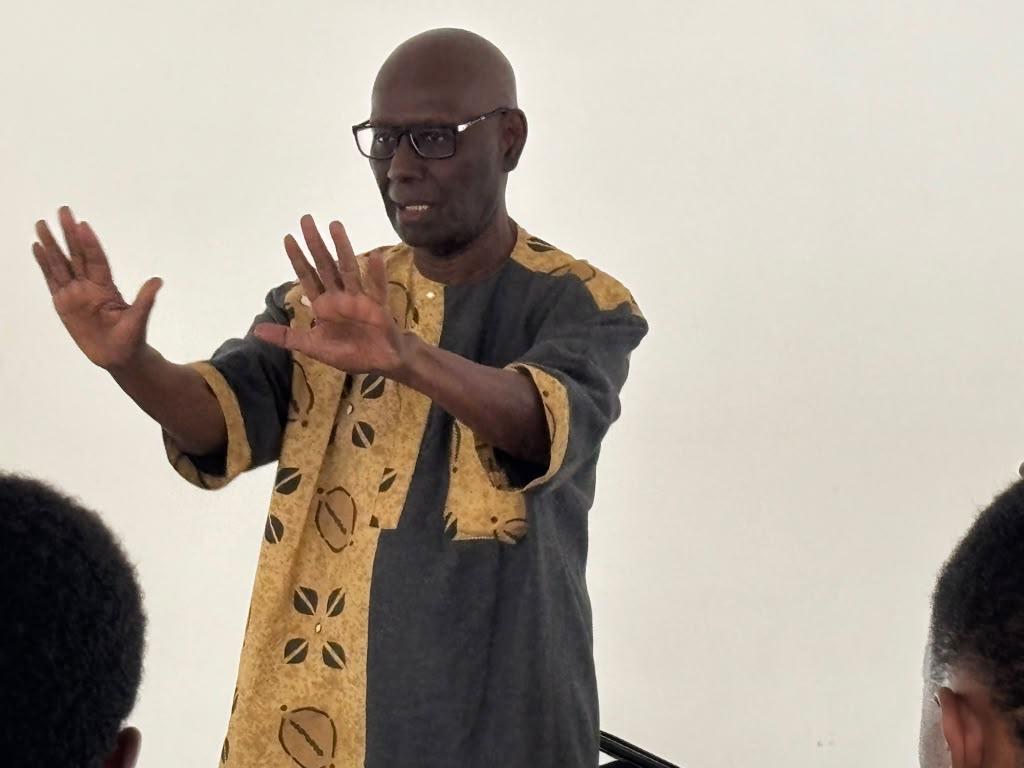
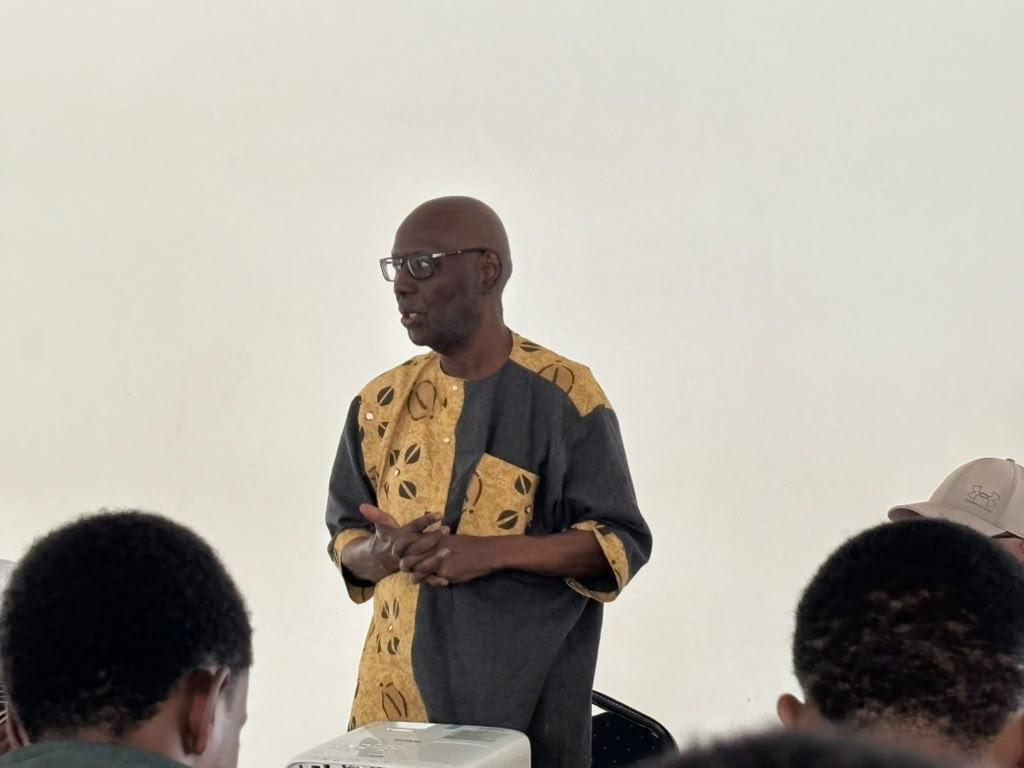
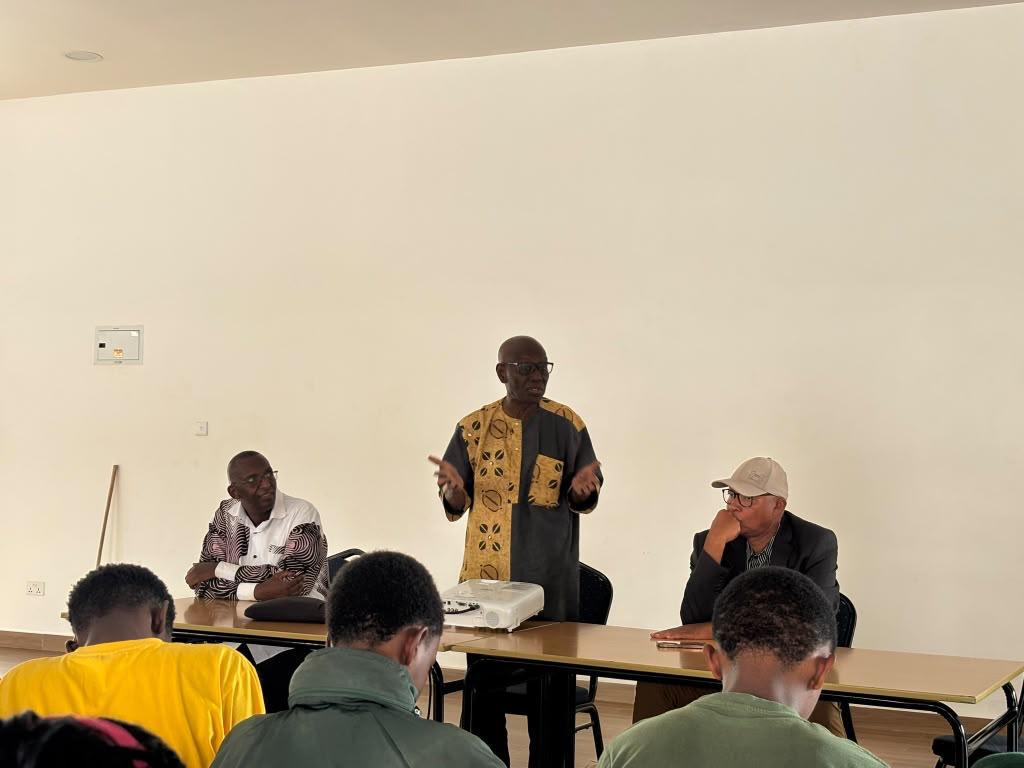
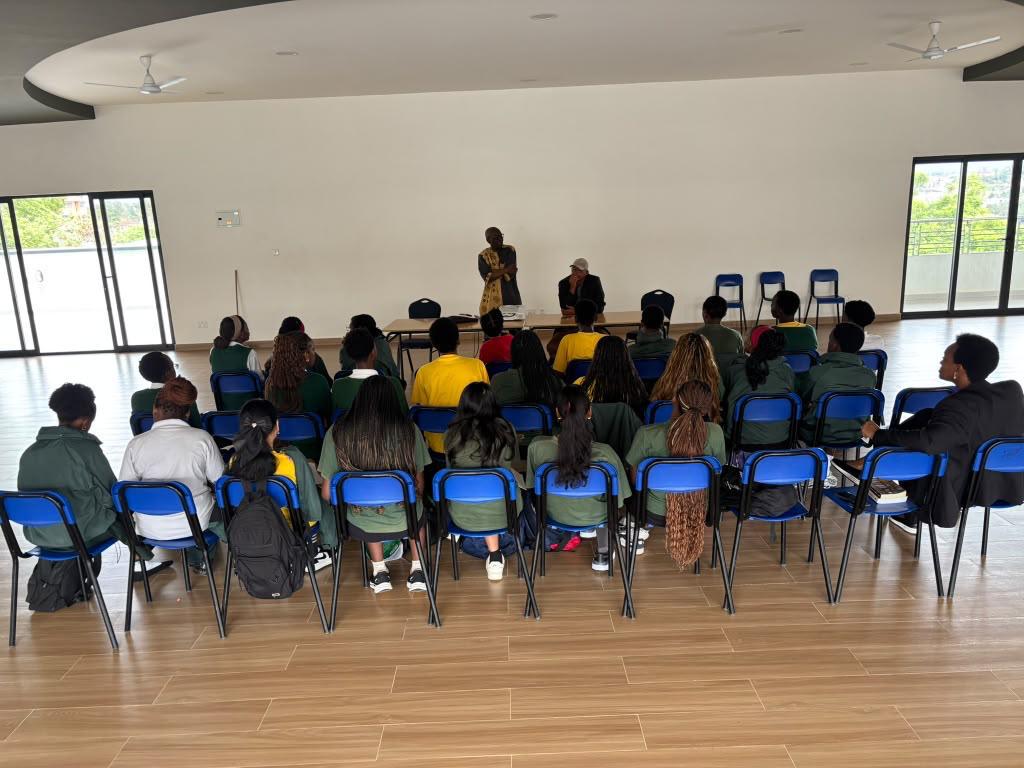
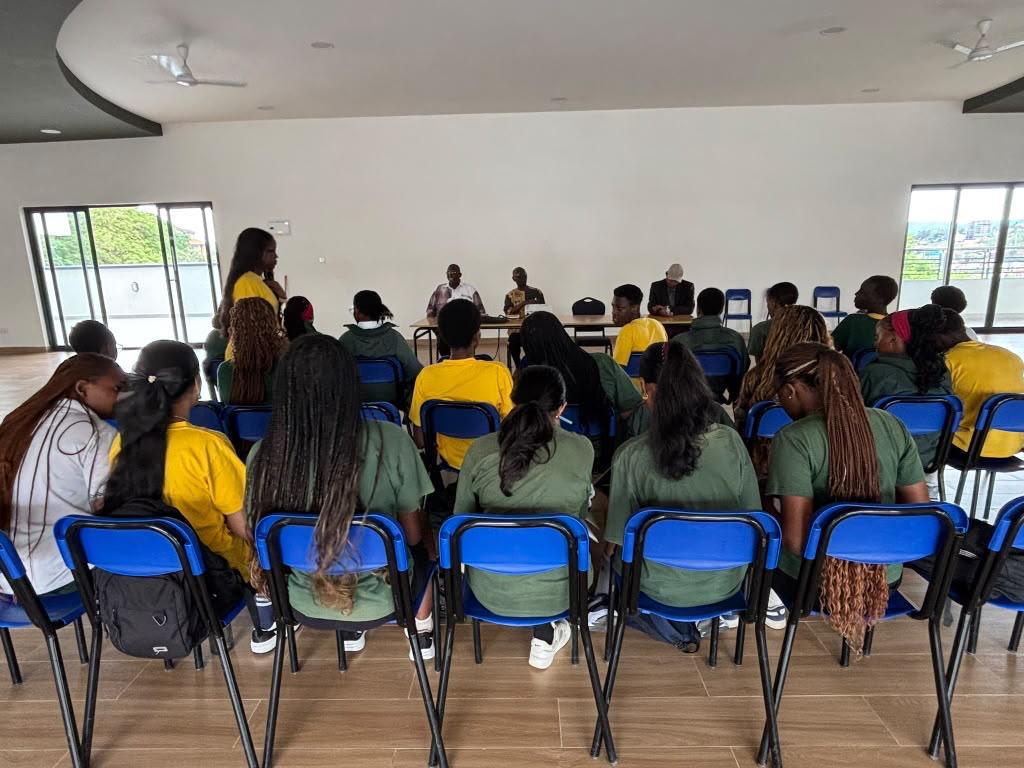
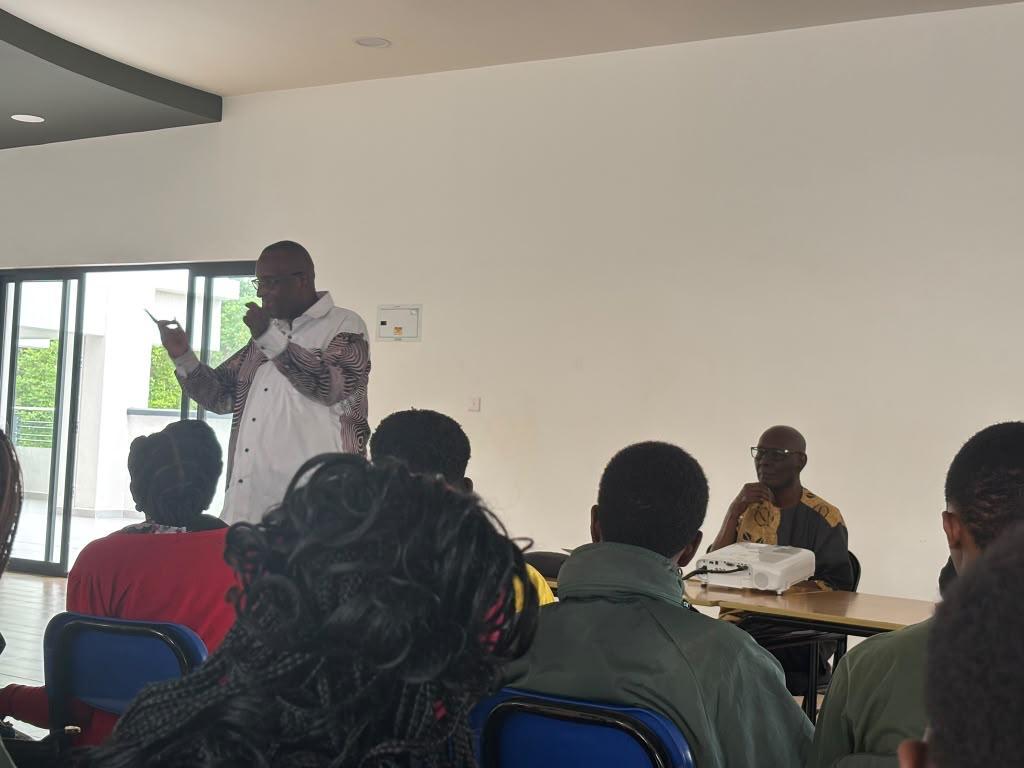
At Green Hills Academy in Kigali, Boubacar Boris Diop, the internationally acclaimed Senegalese writer recently joined teacher Phoebe Mwavu and 25 students for an informal exchange conducted in French and English.
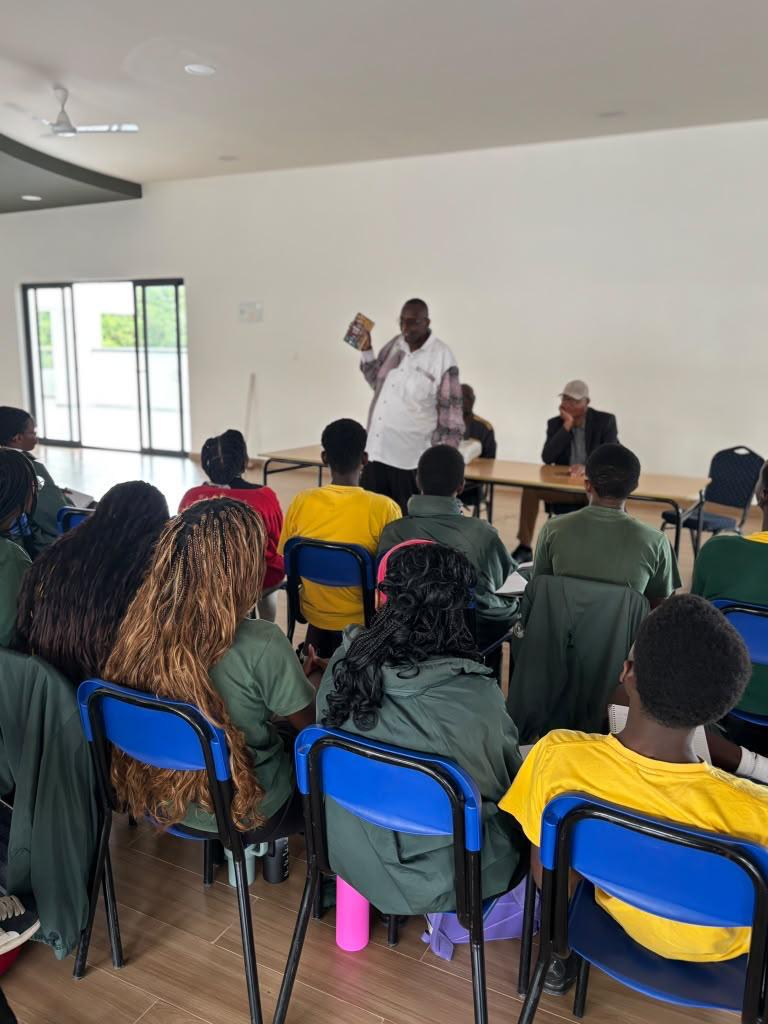
The students came from various countries, including Rwanda, Uganda, Kenya, Tanzania, Congo, India, Nigeria, Sudan, and Ghana. Co-organized by the Global Platform for the South (GPS) and Green Hills Academy, the encounter sparked a thoughtful conversation about imagination, the challenges of writing, artificial intelligence, and the future of literary creativity. Boris Diop was accompanied by Dr. Jean-Pierre Karegeye, GPS Executive Director, and Peace Uwimbabazi, a parent attending the event.
A grandfather in conversation with his grandchildren
Boris Diop had expressed a particular wish: to meet younger students in a setting resembling a conversation between a grandfather and his grandchildren. He wanted an exchange in which experience could meet curiosity without the formality of a lecture.
For approximately one hour, the conversation unfolded à bâtons rompus, moving freely among questions about inspiration to write a novel, develop characters, and the time needed to reach its climax and closure and the unexpected directions a story can take.
How does a novelist begin? Can characters develop differently from what the author intended? What makes a writer choose one subject rather than another?
The students’ questions revealed an interest in the work behind a book: the decisions, doubts, discoveries, and revisions that readers never see. Boris Diop’s responses were accessible and generous, inviting further questions rather than closing the discussion. The students’ different backgrounds added to an exchange in which literature became a meeting place across generations, languages, and nationalities.
Facing La Page Blanche
Twice during the conversation, students raised the question of la page blanche—the blank page.
Does a writer sometimes feel unable to begin? And what happens when, having already started, the writer feels unable to continue?
The recurrence of this question was revealing. These young people were thinking about the moments when ideas resist expression, when a sentence will not come, or when a story seems to lose its direction.
Their questions made room for an important dimension of creative work. Writing involves hesitation, patience, revision, and the effort to find one’s voice. For students exploring their own creativity, being able to discuss these difficulties with an experienced writer made the exchange especially meaningful.
Artificial Intelligence and the future of writing
The students also asked whether artificial intelligence could replace writers and threaten creativity. Their concern invites a further question: when a machine can quickly produce a text, what happens to the effort through which someone learns to write?
Boris Diop observed: “AI may offer assistance, but a danger arises when that assistance replaces a student’s own thinking, imagination, and engagement with language. Faced with a blank page, the temptation to accept an immediate answer can interrupt the slower process of discovering what one wants to say.”
Joining the conversation, Andy Amour, a board member of Green Hills Academy, spent time exchanging ideas with the students about AI.
In his exchange with parent Peace Uwimbabazi, Jean-Pierre Karegeye also raised questions of authorship, originality, cultural representation, and responsibility for what is written. These concerns are particularly important for young people developing their intellectual independence.
Peace Uwimbabazi emphasized that education must create space to examine these risks. Building on her comment, Diop added that learning to use technology should go hand in hand with learning to question it, recognize its limitations, and remain accountable for one’s own words.
“Literature draws on memory, emotion, history, observation, and lived experience. Protecting the space in which young people develop those resources is an educational responsibility,” said Boris Diop.
Literature and memory in Rwanda
The encounter also carried a particular resonance in Rwanda. Boris Diop is the author of Murambi, the Book of Bones, a novel confronting the 1994 Genocide against the Tutsi. His work connects literary creation with questions of memory, historical responsibility, and our obligations toward others. Meeting him offered students a connection with an African literary tradition in which writing engages deeply with society and human experience.
Bringing the GPS mission into schools
The encounter reflects the educational and cultural mission of GPS, which connects universities, public institutions, industry, artists, civil society, and communities around knowledge production and social transformation.
For GPS, secondary schools are essential to this work. They are places where young people begin to discover their interests, test their ideas, and develop the confidence to contribute.
Boris Diop, Associate Director and Co-Founder of GPS, helps advance this mission through literature, creative writing, and intergenerational dialogue.
Building on this encounter, GPS intends to develop further literary conversations, writing activities, and readings of works from across the Global South with secondary schools.
The aim is to encourage young people to become active readers, independent thinkers, and storytellers in their own right.
A shared space for discovery
What made the Green Hills Academy encounter memorable was the students’ willingness to ask questions—returning twice to the question of failure, or what happens when words fail—and the openness with which their questions were received.
For an hour, questions about the blank page, artificial intelligence, and the beginnings of a novel brought generations together. The conversation gave young people space to consider their own voices—and what they might one day choose to write.
Speaking about his reading, one student observed that there were books he loved and others he did not. His remark prompted a thoughtful exchange with Andy Amour, a board member of Green Hills Academy: How do you choose your books, and why? What makes you curious enough to begin reading? Through this gently probing, Socratic approach, Amour encouraged the student to explore his own interests as a reader and reflect on the curiosity, hopes, and expectations that draw us to a book.
The exchange also suggested another possibility: that readers might become writers, giving words to the stories they have yet to find. Learning that Diop had written his first novel at sixteen helped the students imagine that their own journeys as writers could begin now.
Toni Morrison’s words offer an invitation to young readers standing at that threshold: “If there’s a book you want to read, but it hasn’t been written yet, then you must write it.” Perhaps a reader’s unfulfilled wish is where a new story begins.
The purpose was to talk with students about writing, just as Boris had wished. Yet, the exchange continued beyond the classroom. On the way out, Boris Diop, Peace Uwimbabazi and Jean-Pierre Karegeye stopped to greet Lucie Umulisa, the director of admissions, and another conversation about writing began. The shared interest in creative writing continued to bring people together, opening new spaces for dialogue and reflection.
Reflecting on the encounter, GPS Executive Director Jean-Pierre Karegeye expressed his gratitude: “Our sincere thanks go to Green Hills Academy and its leadership, particularly High School Principal Juliet Kithinji, Marketing and PR Director Nilla Birungi, and board member Andy Amour. We are also grateful to teacher Phoebe Mwavu and parent Peace Uwimbabazi—and above all to the students, whose curiosity shaped the conversation.”
With students at its center, the classroom became a community space: an educational ecosystem in which a teacher, a writer, a board member, a parent, and a representative of an international organization each contributed a distinct perspective. The encounter offered a form of co-teaching, bringing the teacher’s pedagogical guidance into conversation with literary experience, parental insight, and community engagement. Education emerged as a shared responsibility, sustained by the relationships between the school and the wider world.
And perhaps, somewhere between a student’s question and a writer’s reply, the blank page had already begun to change: from a silence to be feared into a space where a young voice might find its first words.
The author, Prof. Wajiha Raza Rizvi is Head of Communication, Media and Creative Industries at the Global Platform for the South (GPS). She is also a university professor, filmmaker, screenwriter and director of the Film Museum Society.
The Global Platform for the South (GPS) brings together public and private sector institutions, knowledge, art and industry to foster collaboration and exchange.
Loading comments...
Leave a comment