



Communication Minister and government spokesperson René Emmanuel Sadi said on Sunday that the 93-year-old leader was expected back soon, dismissing rumours surrounding his prolonged stay abroad.
“The president is alive. There is no power vacuum,” Sadi said in an interview with Radio France Internationale (RFI), without providing details on when Biya would return.
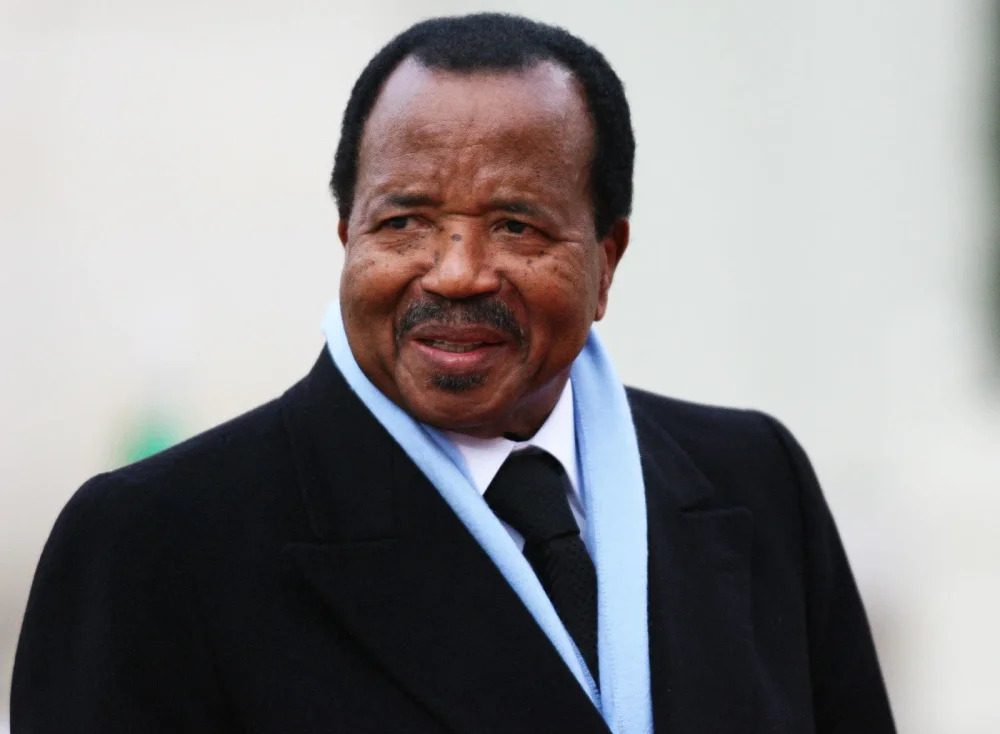
Biya has not been seen publicly since June 7, when he left Cameroon for what officials described as a “brief private stay” in Switzerland. The absence, which has now lasted more than 50 days, has renewed questions about the health of the world’s oldest serving head of state.
The government has repeatedly rejected reports suggesting that Biya is seriously ill. Sadi previously said the president was in good health and continuing to work from Geneva, where he has spent extended periods in recent years.
“Reports claiming otherwise are pure fantasy and malicious manipulation aimed at destabilising opinion,” Sadi said.
Other senior officials have also defended Biya’s absence. Higher Education Minister Jacques Fame Ndongo said the president had continued to follow government matters through documents submitted by his aides.
Labour Minister Grégoire Owona offered a different explanation, describing Biya’s absence as annual leave and arguing that the president, like any other citizen, had the right to take time off.
“Paul Biya, elected by the Cameroonian people and paid by them, is a worker who has the right to annual leave,” Owona said.
However, opposition figures have criticised the lack of clarity surrounding the president’s whereabouts and the extended nature of his stay abroad.
Mamadou Mota, vice-president of the opposition Cameroon Renaissance Movement, said Biya’s absence had created an “institutional vacuum”, arguing that the country could not be governed remotely while facing major social and economic challenges.
Concerns have also grown because Biya has yet to appoint a new government after being sworn in for his eighth consecutive seven-year term in November 2025. The presidential election that secured his latest mandate was disputed by opposition groups, which alleged irregularities and voter suppression.
Cameroon’s authorities banned public discussion of Biya’s health in October 2024 after another prolonged absence, but speculation has continued online, with social media users reviving jokes describing him as a “remote-work president”.
The debate has also raised questions about succession arrangements. Parliament restored the office of vice-president in April as part of constitutional reforms, but the position remains vacant, leaving no designated deputy should the president become temporarily or permanently unable to perform his duties.
Meanwhile, political tensions have intensified within the ruling Cameroon People’s Democratic Movement (CPDM), with senior party officials recently holding a rare meeting described only as an “important working session”.
Biya, who first became president in 1982, has increasingly spent time outside Cameroon in recent years, particularly in Switzerland. His long absences have become a recurring source of debate over governance.
Loading comments...
Leave a comment