



Despite these efforts, the terrorist group has survived, rebuilt its ranks and continued to play a significant role in the conflicts that have plagued eastern DRC.
The Congolese government has once again pledged to dismantle the FDLR under agreements that would require its fighters to lay down their weapons, relocate to designated camps and eventually return to civilian life.
However, former members of the FDLR interviewed by IGIHE say similar promises have been made before without producing lasting results.
They allege that Kinshasa’s previous efforts to neutralise the group were often accompanied by political manoeuvring and that the same pattern could continue under the latest arrangements.
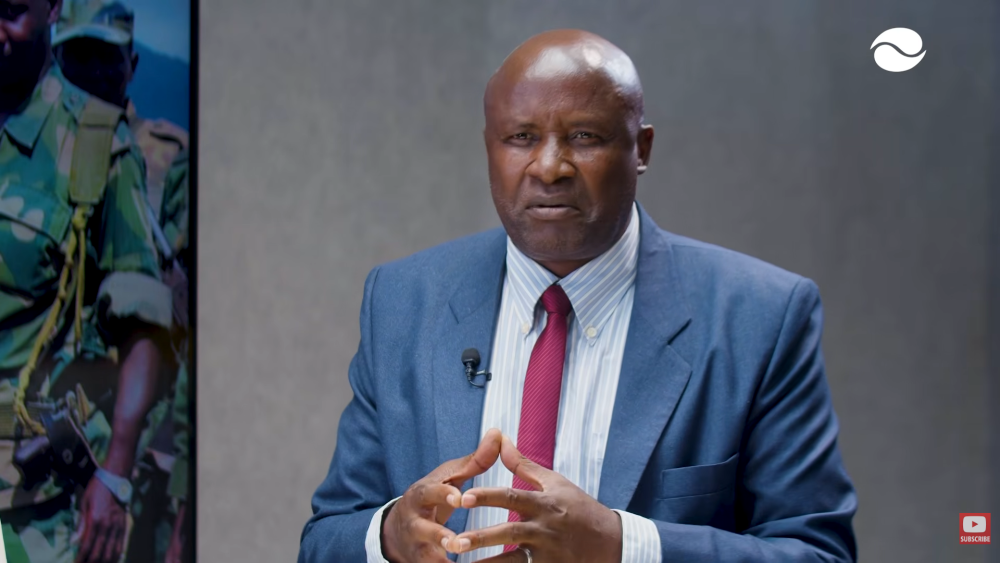
Pastor Niyonzima Jean Damascène, who previously worked in intelligence and reconnaissance for the FDLR before returning to Rwanda in 2023, told IGIHE that the group’s relationship with successive governments in Kinshasa dates back decades.
He said that when tensions escalated between the government of Laurent-Désiré Kabila and Rwanda, Kabila sought the support of former Rwandan government soldiers, commonly referred to as Ex-FAR, and Interahamwe militia who had fled to different African countries.
According to Niyonzima, the groups reached an agreement to cooperate militarily and pursue a common objective against Rwanda.
“At that time, they agreed to work together against the Tutsis. After defeating them, they would push them out and help them capture Rwanda. That agreement is still in place today because some forces have left the FDLR and joined the FARDC. They include generals, colonels and others who have joined,” he said.
Joseph Kabila succeeded his father, Laurent-Désiré Kabila, as president of the DRC in 2001.
Niyonzima said Joseph Kabila later sought to relocate FDLR fighters within the country because of disagreements with the group. In 2002, he said, the fighters were placed in camps but were not fully disarmed.
According to Niyonzima, a major development came in 2003 when Congolese forces pursued FDLR fighters who had been based in Kamina. The fighters subsequently moved towards eastern DRC, where they joined other members of the group.
Niyonzima alleged that Congolese forces sometimes staged operations against the FDLR while maintaining an understanding with its commanders.
He claimed commanders on both sides would communicate before an operation, allowing FDLR fighters to withdraw before Congolese troops arrived.
“If one commander had worked with another commander, and one of them was sent to the east to fight the FDLR, he could not actually fight us. He would tell us, ‘We are going to attack this place. Leave because we are coming and we will burn it,’” he said.
He claimed that Congolese forces would then carry out the operation to create the impression that they had defeated the FDLR.
“They would actually come and burn the area, but because we had agreed beforehand, we would have already left. They would burn houses to show that they had carried out an operation, but they would leave equipment behind. When we returned, we would find the equipment they had left for us. That is what we used,” he said.
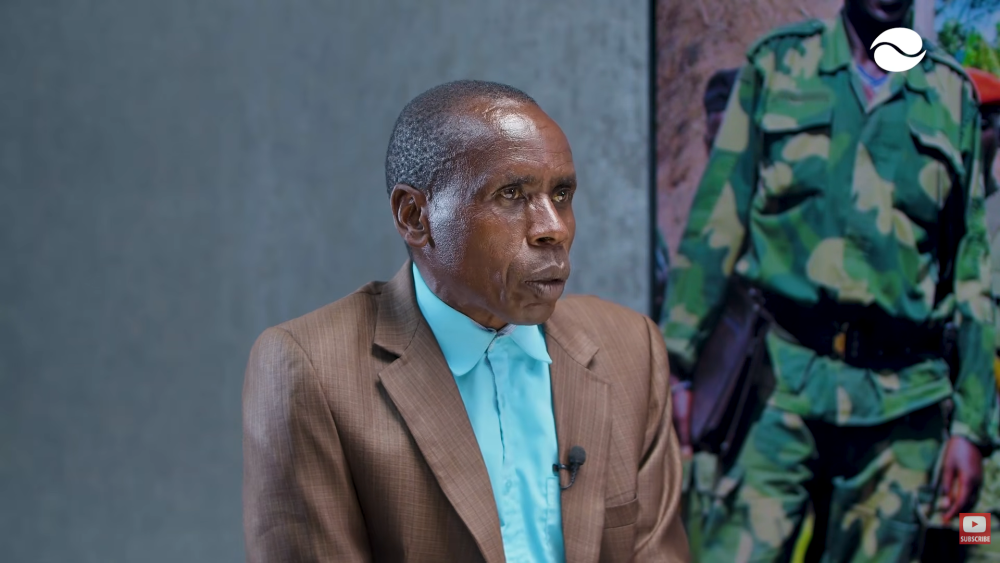
Maj. (Rtd.) Makuza Anastase, who worked closely with FDLR president Lt. Gen. Victor Byiringiro before returning to Rwanda in 2020, also claimed that the FDLR maintained relationships with successive governments in Kinshasa.
He said public announcements that the Congolese government was preparing to dismantle the FDLR did not always reflect what was happening on the ground.
“I think there was a time when you would hear Congo saying that it was going to dismantle the FDLR. That was simply a way of deceiving the international community. In reality, that is not how things happened,” he said.
Makuza alleged that Congolese forces would announce military operations, launch heavy bombardments and instruct FDLR fighters to leave targeted areas before troops arrived.
“They would tell us to leave, we would leave, and then they would arrive and burn things to make it appear as though they had taken control of the area. Afterwards, they would leave,” he said.
He further alleged that the troops sometimes left ammunition and food behind for FDLR fighters.
According to Makuza, messages were also allegedly left on trees for FDLR fighters, including one that read: “Our enemy is one, it is Rwanda.”
Why Kinshasa continues to rely on the FDLR
The administration of President Félix Tshisekedi, which succeeded Joseph Kabila’s government, has at times characterised the FDLR as a group largely composed of elderly fighters and therefore lacking the capacity to pose a serious security threat to Rwanda.
Makuza disputed that description, arguing that the FDLR has evolved over generations.
“An elderly person is someone who fled when he was already old. I am also getting older. But haven’t I had children? Didn’t others have children? We reached there and had children, those children grew up, and others are still being born. The FDLR is not made up of elderly people because it does not belong to one, two or three people. There are many of them. Those who went there as children and those who were born there are all part of the FDLR,” he said.
Makuza argued that elderly fighters represent only a small proportion of the group and claimed that its ranks increasingly include younger people who were born into families linked to its founders.
Niyonzima and Makuza both argued that the Congolese government has continued to rely on the FDLR because they consider its fighters more experienced and more willing to engage in combat than many Congolese troops.
Niyonzima said Kinshasa has particularly turned to the FDLR whenever its forces face significant military pressure.
“Kinshasa often turns to the FDLR, especially when it is under pressure. Since 1998, whenever it faced difficult situations, that is what happened. When M23 first emerged, Congo also relied on the FDLR, and it has done so again recently,” he said.
FDLR and Wazalendo cooperation
Niyonzima said cooperation between the Congolese government and the FDLR has become more visible in recent years, particularly through the broader alliance involving Wazalendo militia.
He claimed that FDLR-linked fighters and other armed groups have been deployed alongside Congolese forces in battles against AFC/M23.
“They fought during the first M23 rebellion, and now they are openly working together against the current M23. They have hidden behind the term Wazalendo. There are groups that the FDLR helped establish. Nyatura is one of them. The FDLR trained them and provided them with equipment,” Niyonzima said.
He said FDLR and Nyatura fighters are often deployed to areas where fighting is particularly intense because, in his view, they have more battlefield experience than regular Congolese troops.
“Where the FDLR and Nyatura are deployed, it becomes difficult for M23 to dislodge them. The Congolese government sees that these are fighters and thinks, ‘If I remove these people, I will lose a lot. I will not have this kind of strength again,’” he said.
According to Niyonzima, when fighting intensifies, Congolese forces provide FDLR and other Wazalendo members with equipment to help them confront AFC/M23 fighters.
Loading comments...
Leave a comment