



The French Ministry for Europe and Foreign Affairs said on Wednesday, November 18, 2026, that it opposed establishing return hubs outside the EU, questioning their effectiveness and compatibility with French values.
A ministry spokesperson said France's position remained unchanged when asked about comments by Minister Benjamin Haddad regarding the proposed arrangement with Rwanda.
“We believe that, in practice, these hubs are ineffective in the way they are organized. They also do not reflect the values we seek to defend,” said the spokesperson.
France said countries wishing to participate in the initiative could use their own national budgets but opposed the use of EU funds to finance such arrangements.
The government said it had achieved its objective of ensuring that the initiative would not receive financial support from the EU.
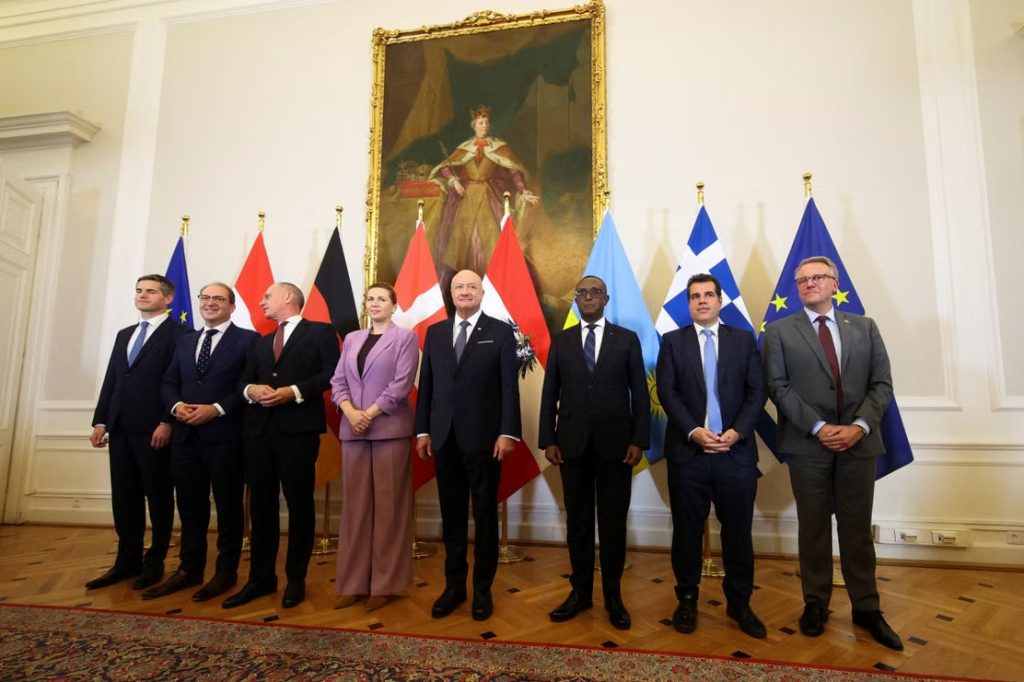
France's position comes after Rwanda and five EU countries, Austria, Denmark, Germany, Greece and the Netherlands, jointly announced discussions on establishing a pilot return hub for migrants who no longer have the legal right to remain in those countries.
In a statement issued on November 16 and signed by Minister of Interior Vincent Biruta, Rwanda said the discussions aimed to reach an agreement that would allow the first migrants to be transferred to the country by 2027.
Biruta cited Rwanda's experience hosting refugees and migrants through international partnerships as evidence of its capacity to implement the proposed arrangement.
He pointed to the Emergency Transit Mechanism, established in 2017 in partnership with the United Nations High Commissioner for Refugees (UNHCR) and the African Union, to receive asylum seekers stranded in Libya.
Rwanda has received more than 3,000 people through the programme, many of whom have subsequently been relocated to countries including Canada, the United States, Germany and Finland.
The proposed hub would accommodate people who entered any of the five countries irregularly, are subject to enforceable return decisions and have no legal grounds to remain.
Rwanda said those transferred would have the option of integrating into Rwandan society and rebuilding their lives or voluntarily returning to their countries of origin.
The government added that the arrangement would be implemented in accordance with Rwandan law, EU legislation and international human rights standards.
The European Commission is participating in the discussions as an observer, while the International Organization for Migration (IOM) is providing technical assistance.
The initiative follows an earlier agreement between Rwanda and the United Kingdom to relocate asylum seekers to Rwanda. However, the Labour government, led by Prime Minister Keir Starmer, abandoned the scheme after taking office in July 2024.
Loading comments...
Leave a comment