



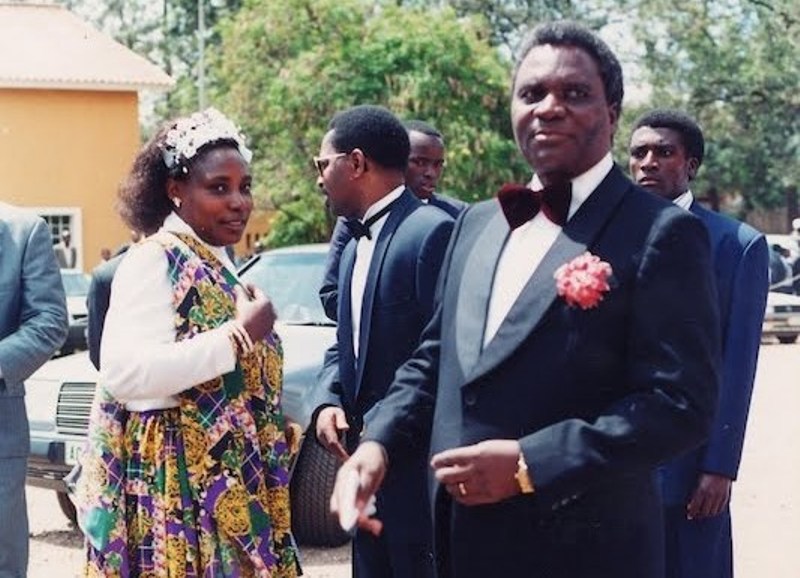
Kanziga, Habyarimana’s wife, was frequently portrayed in accounts from the period as a powerful figure in political affairs despite holding no official government position.
Various documents, intelligence reports, testimonies from security officials and media reports from the period have described her as having influence that extended beyond her formal role as the President’s wife.
In a June 24, 1994 letter, Lt Col Charles Uwihoreye, an officer in the defeated Rwandan Armed Forces (Ex-FAR), wrote to Col René Galinié, a security adviser at the French Embassy.
He described the hierarchy within the Akazu as appearing to place Habyarimana at the top, followed by Kanziga, while noting that her activities suggested an influence that went beyond that position.
Historical accounts have also linked Kanziga to influential members of her family, including Col Elie Sagatwa and Protais Zigiranyirazo, popularly known as “Monsieur Z.” They were among figures who were described as having significant influence over political and security affairs during the final years of Habyarimana’s government.
One incident often cited in accounts of Kanziga’s influence occurred on February 27, 1994, when Habyarimana reportedly went to Hôtel Rebero l’Horizon but was prevented from entering by security personnel.
According to the account, the guards told him that he could enter only after receiving permission from Kanziga and her brothers.
At the time, Kanziga and her brothers were reportedly holding a fundraising meeting at the hotel to raise money for the Interahamwe militia, which played a role in the 1994 Genocide against the Tutsi. Three million Rwandan francs were reportedly raised during the meeting.
Documents revealed by French media outlets Mediapart and Radio France in February 2019 also indicated that several senior Ex-FAR officers were closely associated with Kanziga and Zigiranyirazo. The group was reportedly referred to as the “Colonels de Madame,” or “Madame’s Colonels.”
Those named included Col Sagatwa, Col Théoneste Bagosora, Lt Col Anatole Nsengiyumva, Lt Col Nkundiye, Lt Col Tharcisse Renzaho, Col Laurent Serubuga and Col Pierre Célestin Rwagafilita.
‘She is the real leader of this country’
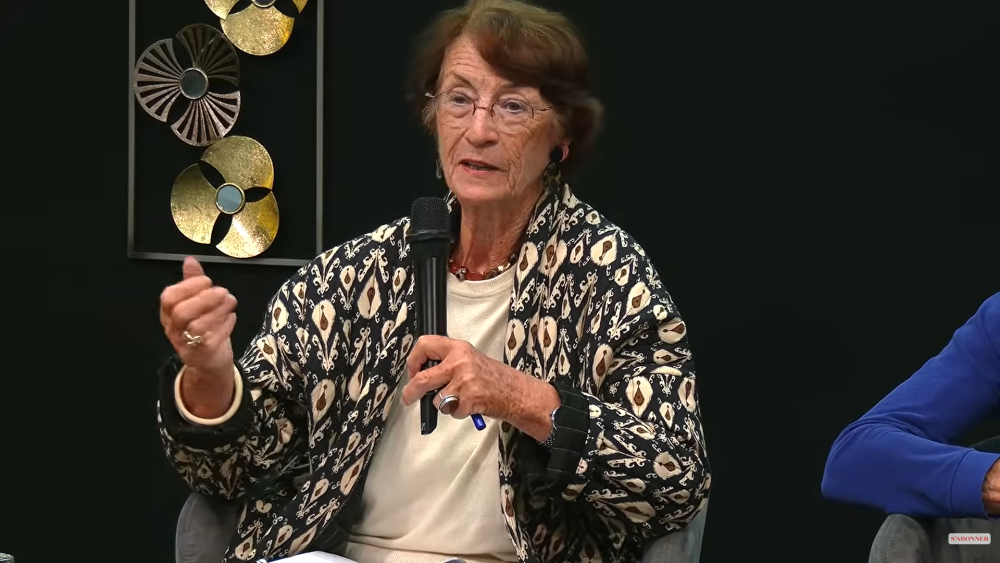
Kanziga’s reported influence was also recalled by Belgian journalist Colette Braeckman during a discussion on the shooting down of Habyarimana’s plane held in Paris on September 9, 2026.
The event, organised by French magazine Le Nouvel Obs, brought together former investigating judge Marc Trévidic, writer Michel Bussi, journalists Patrick de Saint-Exupéry and Colette Braeckman, and François Graner of the Survie organisation.
Braeckman, who spent many years reporting from the Great Lakes region, spoke about the structure of Habyarimana’s government and the political situation in Rwanda before the President’s plane was shot down.
She recalled travelling to Rwanda several times from the beginning of the 1990s, including shortly after the RPA launched its war on October 1, 1990.
“From the beginning of the 1990s, I made as many trips as possible to Rwanda because I was there when the war began. I saw people detained in Kigali Stadium before meeting President Habyarimana, who told me, ‘Yes, there are many economic problems.’ At the time, we were waiting to visit people, and the country did not have much money,” she said.
Braeckman then recalled an encounter with Habyarimana that she said particularly surprised her.
“What surprised me was that President Habyarimana introduced me to his wife and told me, ‘This is my wife, and she is the real leader of this country.’ It was in the 1990s, a few days after the war began in October,” she said.
The account provides another perspective on the influence attributed to Kanziga during Habyarimana’s presidency, at a time when she held no formal government position.
Lt Col Uwihoreye, who died in 2009, also wrote to Col Galinié that following Habyarimana’s death on April 6, 1994, Kanziga assumed a more visible leadership role.
Before she was evacuated by France, Kanziga was accused of ordering the killing of politicians opposed to the regime and Tutsi neighbours in Kanombe.
Among the politicians reportedly killed on her orders were Prime Minister Agathe Uwilingiyimana, Minister of Social Affairs Landouald Ndasingwa, Foreign Minister Boniface Ngulinzira, Agriculture Minister Frédéric Nzamurambaho and Health Minister Faustin Rucogoza.
Loading comments...
Leave a comment