



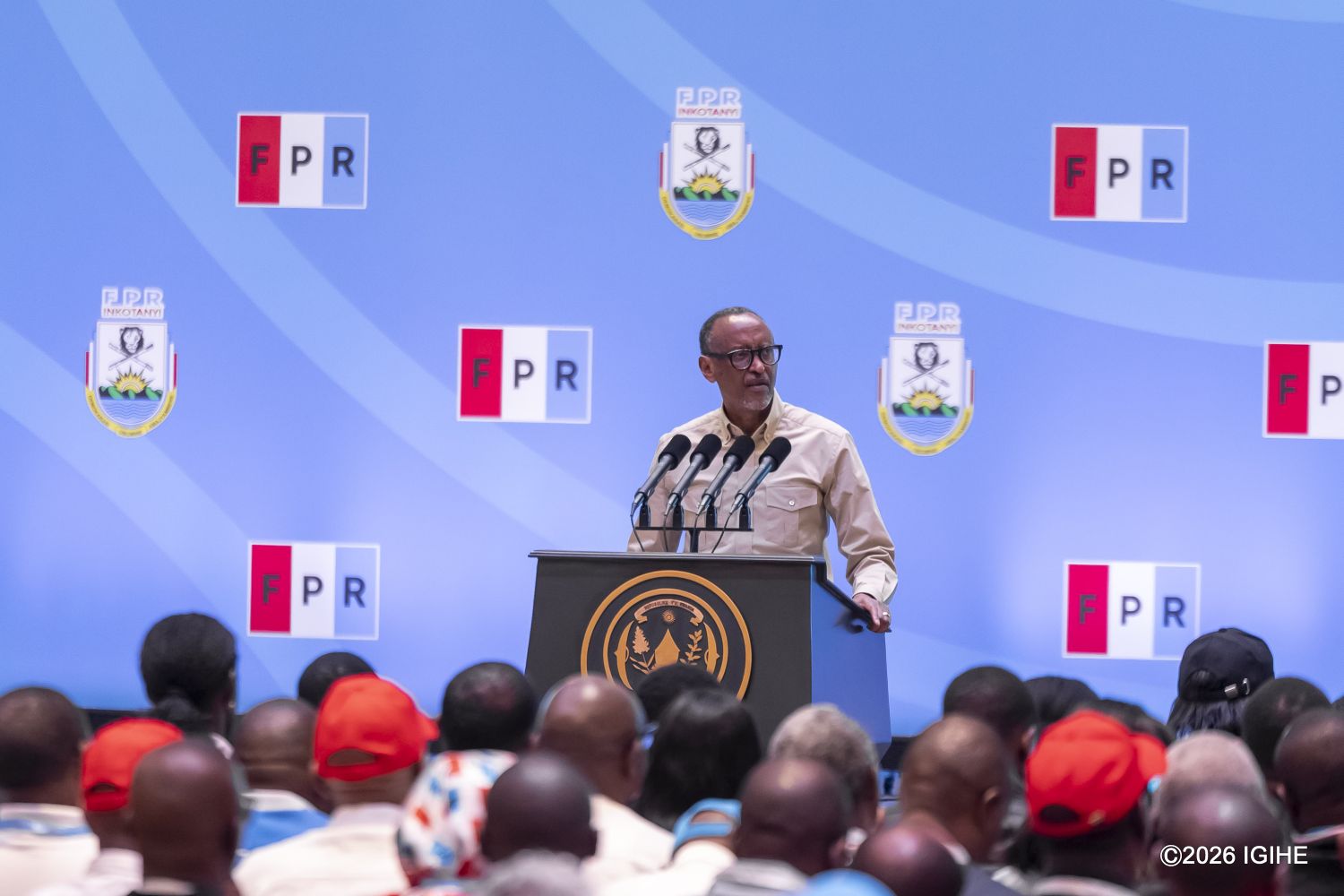
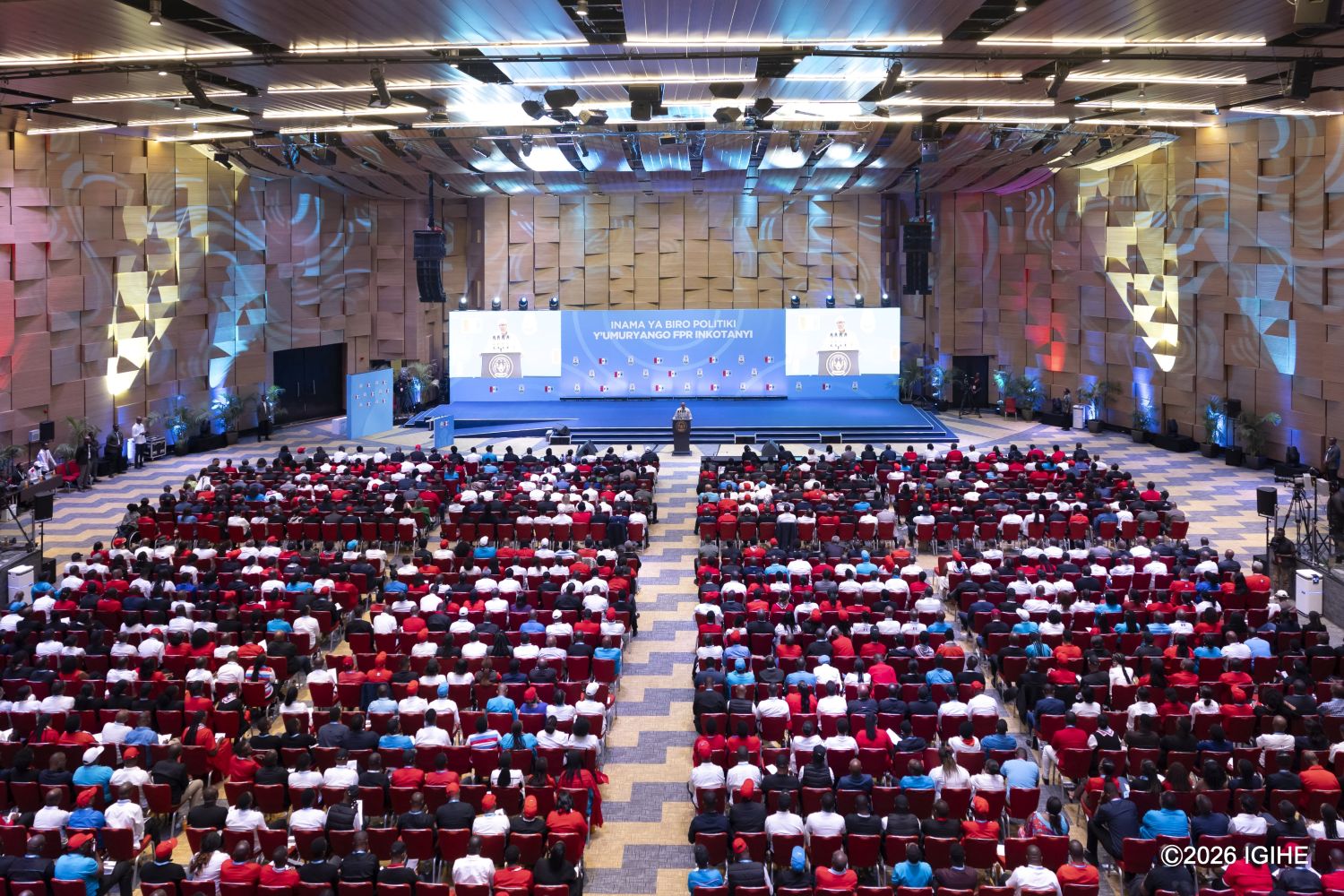
"I will only shut up when I'm dead. That is the only way to make me shut up," Kagame said on Friday, July 17, during the Rwanda Patriotic Front (RPF-Inkotanyi) Political Bureau meeting at Intare Arena, attended by more than 2,000 party members, government officials, diplomats, representatives of political parties and young professionals.
The President's remarks came as he defended Rwanda's position on the security situation in eastern Democratic Republic of Congo (DRC), insisting that Kigali's concerns have repeatedly been ignored despite clear evidence of threats posed by the FDLR and attacks against the Banyamulenge community.
Kagame argued that the conflict in eastern DRC did not originate in Rwanda and should not be portrayed as Rwanda's war.
"This conflict we have in eastern Congo was not started by Rwanda at all," he said, maintaining that the root causes of the conflict lie within the DRC and the Kinshasa government's refusal to address longstanding grievances raised by the M23 rebels and the communities they represent.
He noted that Rwanda was drawn into the conflict due to the continued presence of the FDLR, a militia founded by individuals involved in the 1994 Genocide against the Tutsi that continues to pose a security threat to Rwanda.
He said Rwanda has for years urged the Congolese government and the international community to dismantle the FDLR and prevent the group from posing a threat across the border, but those calls have largely gone unanswered.
According to Kagame, repeated attempts to resolve the crisis through regional and international mediation have failed because, in his view, the underlying security issues affecting Rwanda have not been addressed.
He cited talks held in various capitals, including Nairobi, Doha and Washington, saying discussions consistently overlooked Rwanda's concerns while placing pressure on Kigali.
Kagame also criticised sanctions imposed on Rwanda, saying they were introduced without giving the country an opportunity to fully present its case.
"There is no time for Rwanda to be listened to. It's just sanctions, sanctions, sanctions," he said, arguing that punitive measures have become a substitute for genuine dialogue.
The President further accused some international actors of trying to shape the narrative around the conflict while disregarding facts presented by Rwanda.
"There are people who think they just dictate what the truth should be and what should happen, and for the rest, you just shut up," he said.
Kagame drew parallels between the international community's response to Rwanda's current security concerns and historical failures to heed warning signs before the 1994 Genocide against the Tutsi.
He recalled that during the liberation struggle, he received a warning from a French official during a 1991 visit to Paris: "Even if you take Kigali, you will not find your people." He said the meaning of the statement only became clear after the genocide unfolded.
The President also expressed concern over recent violence targeting the Banyamulenge community in the Minembwe area of eastern DRC.
He said Rwanda had raised concerns about attacks on civilians, only to be told the issue was "none of your business."
"It's like, shut up, it's none of your business," Kagame said. "If it is not my concern, maybe it should be yours. Why are you not concerned?"
He argued that dismissing warnings about atrocities against vulnerable communities risks repeating mistakes that have had devastating consequences in the past.
Responding to attempts to pressure Rwanda into silence, Kagame insisted that speaking out against threats to the country's security is not a matter of political choice but of responsibility.
"Making people shut up, just shut up, I think it's going to be probably more difficult than people think," he said.
While acknowledging that Rwanda is a small country that can face external pressure, Kagame said its people should not expect others to guarantee their security.
"You can do much harm to us, granted. But wishing us away is not a small thing," he said.
He concluded by urging Rwandans to remain vigilant and to take responsibility for safeguarding the country's future rather than relying on others.
"If you are there waiting for handouts, or for people to do you a favour so that you can live, it is very sad and absurd," Kagame stated.
Loading comments...
Leave a comment