






In a statement on Saturday, Iran's Supreme National Security Council said the strategic waterway would remain closed until Washington "corrects its behaviour." Mohammad Bagher Zolghadr, the council's secretary and a commander in the Islamic Revolutionary Guard Corps (IRGC), said the US must permanently end its military campaign against Iran and its regional allies, lift sanctions, withdraw its military presence from the region, release frozen Iranian assets, and compensate Tehran for war-related damages.
The demands come as negotiations mediated by Oman continue, with just over a week remaining before the 60-day deadline for reaching a final agreement. The current interim deal, signed in June, envisioned a phased lifting of sanctions and discussions on compensation, while leaving the long-term administration of the strait to further negotiations.
Iranian Foreign Minister Abbas Araghchi said talks with Oman on navigation arrangements were nearing completion, particularly on determining a transit route. However, he stressed that reopening the strait remained contingent on broader political issues, accusing the United States of violating the June agreement.
Oman's foreign ministry said discussions were continuing in a "positive and constructive atmosphere" and urged all parties to avoid actions that could undermine progress.
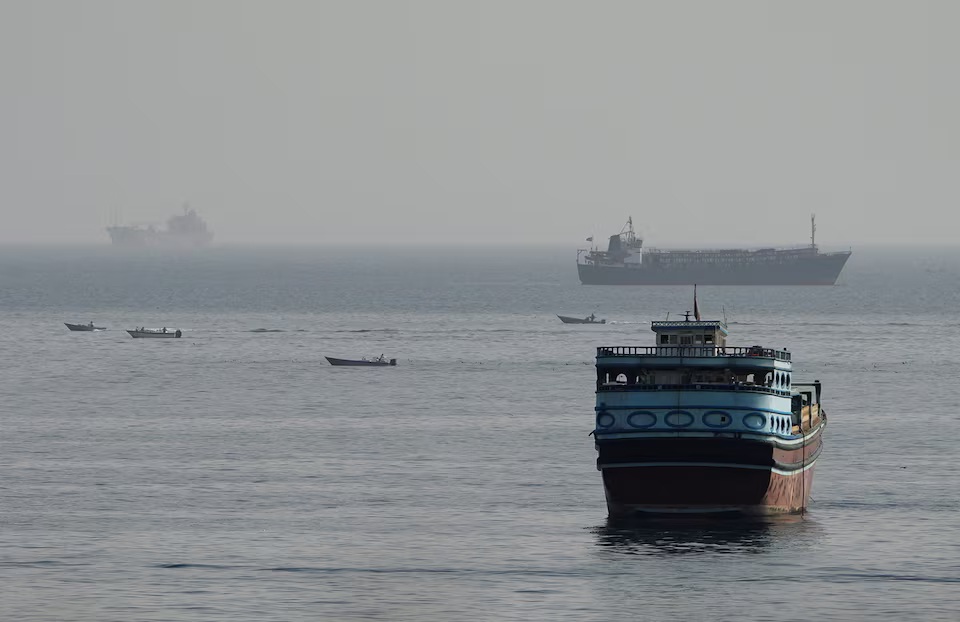
The Strait of Hormuz has remained under an effective Iranian blockade since the United States and Israel launched military strikes against Iran in late February. Tehran has also sought to impose tolls on vessels using the waterway, a proposal opposed by Washington and one that conflicts with established international maritime law governing international straits.
Meanwhile, tensions in the waterway escalated after the United Arab Emirates accused Iran of firing a missile at a tanker owned by the Abu Dhabi National Oil Company (ADNOC) while it was transiting the strait. Emirati authorities said there were no casualties.
Later on Saturday, the United Kingdom Maritime Trade Operations (UKMTO) reported that a vessel east of Khasab, Oman, had been struck by a projectile that caused a fire, which was quickly extinguished. It was not immediately clear whether the incident involved the same vessel reported by the UAE.
The Strait of Hormuz handles roughly a fifth of the world's oil trade, making it one of the most strategically important waterways for global energy supplies. The disruption to shipping has already pushed up global oil prices, driving higher fuel costs in many import-dependent countries, including Rwanda, where motorists and businesses have felt the impact through rising pump prices.
Loading comments...
Leave a comment