



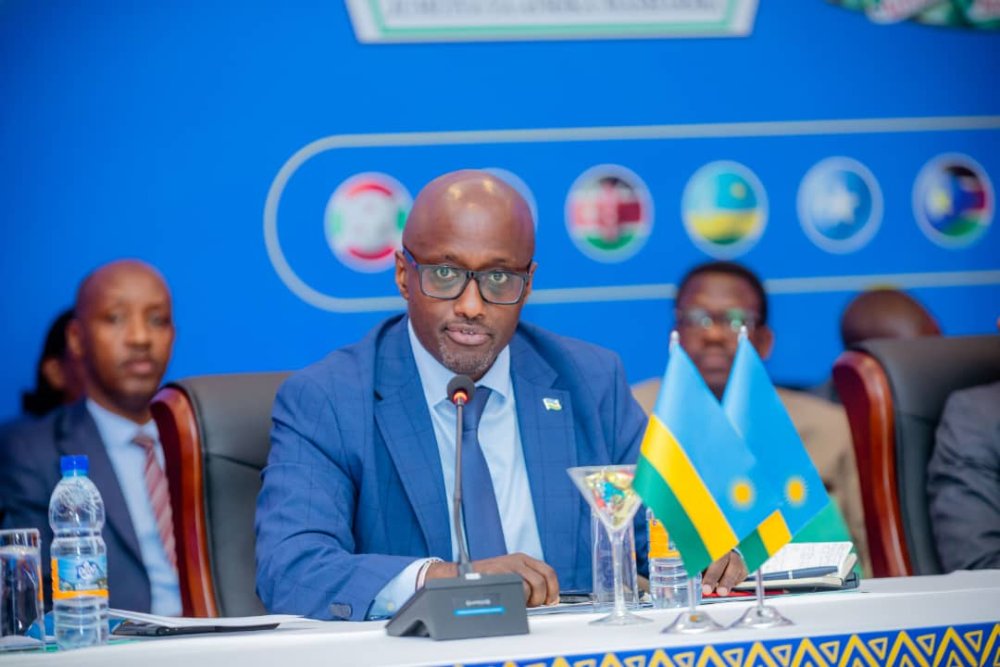
Speaking in an interview with B&B Kigali on June 10, 2026, Nduhungirehe said Rwanda remains willing to restore normal relations, but accused Burundi of repeatedly undermining efforts to stabilise bilateral ties.
Relations between the two neighbouring countries deteriorated significantly in 2015 following an attempted coup against then-President Pierre Nkurunziza. Several individuals involved in the attempt fled to Rwanda, after which Burundi closed its borders with Rwanda.
In 2022, both countries moved to normalise relations and reopened their borders. However, tensions resurfaced in late 2023 following an attack in the Gatumba area of Bujumbura Province by the armed group RED Tabara. Burundi subsequently closed its borders again in January 2024.
At the time, Burundi accused Rwanda of supporting RED Tabara, an allegation Kigali denied, insisting it does not cooperate with groups intent on destabilising neighbouring states.
Renewed tensions and diplomatic engagement
According to Nduhungirehe, further strain followed statements and developments in the region, including remarks made by regional leaders and renewed accusations exchanged between Kigali and Bujumbura.
He cited comments made in January 2024 in Kinshasa by Burundi’s President Évariste Ndayishimiye, who, during a visit to the Democratic Republic of the Congo, expressed support for efforts to mobilise Rwandan youth against the government.
The minister also referred to earlier remarks by the President of the Democratic Republic of the Congo, Félix Tshisekedi, who in late 2023 said his country’s forces would act against Rwanda, describing this as part of a broader regional climate of hostility.
He argued that such statements contributed to worsening relations, particularly given the regional context and ongoing insecurity in eastern DR Congo.
Nduhungirehe further noted that Burundian troops deployed to eastern DR Congo were cooperating with the FDLR militia group, alongside Congolese forces.
He stated that while the Burundian deployment was officially framed as part of operations against armed groups, including RED Tabara, their activities instead indicated coordination with the FDLR.
“They were not deployed against RED Tabara. They were deployed to assist the Congolese army and the FDLR in the plan that President Tshisekedi mentioned during his campaign, and the same plan President Ndayishimiye spoke about in Kinshasa in January 2024,” he said.
He added that Burundian forces had operated in areas closer to the Rwandan border in North Kivu, despite RED Tabara being mainly active in South Kivu, suggesting, in his view, a different operational focus.
Attempts at dialogue
The minister noted that following the capture of Goma and Bukavu by the AFC/M23 coalition in early 2025, Burundi requested dialogue with Rwanda in an effort to ease tensions.
He said intelligence and security officials from both countries met at the border on three separate occasions and reached a number of understandings aimed at de-escalation.
However, he revealed that progress was later undermined by renewed public accusations from the Burundian leadership.
“What happened after that? After that, President Ndayishimiye went on BBC and France 24… accusing Rwanda of planning to attack Burundi. We then asked our Burundian counterparts what had changed, given that we had reached agreements,” he said.
He added that further meetings were facilitated by the United States after AFC/M23 captured Uvira in early December 2025, during which security officials from both countries again met twice at the border and reached additional understandings.
Nduhungirehe said that despite these engagements, Burundian forces remain present in eastern DR Congo and continue, in Rwanda’s view, to cooperate with elements of the FDLR.
He reiterated Rwanda’s position that it seeks peaceful relations with Burundi through dialogue, but argued that Bujumbura has not demonstrated sufficient commitment to sustaining diplomatic progress.
“Rwanda wants good relations with Burundi, dialogue, and resolution of outstanding issues, but Burundi does not show the willingness,” he said, calling on Burundi to end any cooperation with the FDLR militia group, which was formed by the perpetrators of the 1994 Genocide against the Tutsi.

Loading comments...
Leave a comment