



Nduhungirehe made the remarks on Monday, November 16, 2026, after heads of state and government agreed to postpone the election of the organisation's next Secretary-General by 12 months, allowing current Secretary-General Louise Mushikiwabo to remain in office for another year.
The decision followed a deadlock during the 20th Francophonie Summit in Phnom Penh, Cambodia, where member states disagreed on whether to proceed with an election or seek consensus on a candidate.
Speaking after the closed-door discussions, Nduhungirehe welcomed the compromise, saying it had helped preserve unity among member states.
He explained that some leaders were concerned that proceeding with an election based on a simple majority could weaken the organisation, particularly if the winner secured only a small number of votes.
"There was no consensus on the way forward, particularly on whether elections should be held or not. Many Heads of State were concerned that the unity of the Francophonie could be weakened if an election took place, especially if the winner was determined by a simple majority," he revealed.
He said the compromise was proposed by Senegalese President Bassirou Diomaye Faye and Luxembourg's Deputy Prime Minister Xavier Bettel.
However, Nduhungirehe said the impasse exposed a problem that member states needed to address, arguing that rules adopted collectively should not be disregarded when it comes to implementation.
The current election framework was adopted at the 2022 Francophonie Summit in Djerba, Tunisia, where member states agreed on a voting process in which each country has one vote.
Nduhungirehe said the rules had been known to all members but were not applied during the latest leadership contest, despite having been approved by heads of state and government.
"This should serve as a lesson to us. The rules and regulations had already been adopted in Djerba and were known to all member states," he said.
He added that member states could not wait until the final stages of an election process to seek exemption from rules they had previously approved.
"This is a lesson to remember: when Heads of State adopt rules, we must implement them. We cannot wait until the last minute to ask that those rules not be applied. This is an issue we need to address," he added.
OIF to review election rules
Under the compromise reached in Phnom Penh, the OIF Secretary-General will initiate reforms to the organisation's leadership election process within the next 12 months.
Nduhungirehe confirmed that reviewing the rules was part of the arrangement, adding that the process should help prevent similar disagreements in future leadership contests.
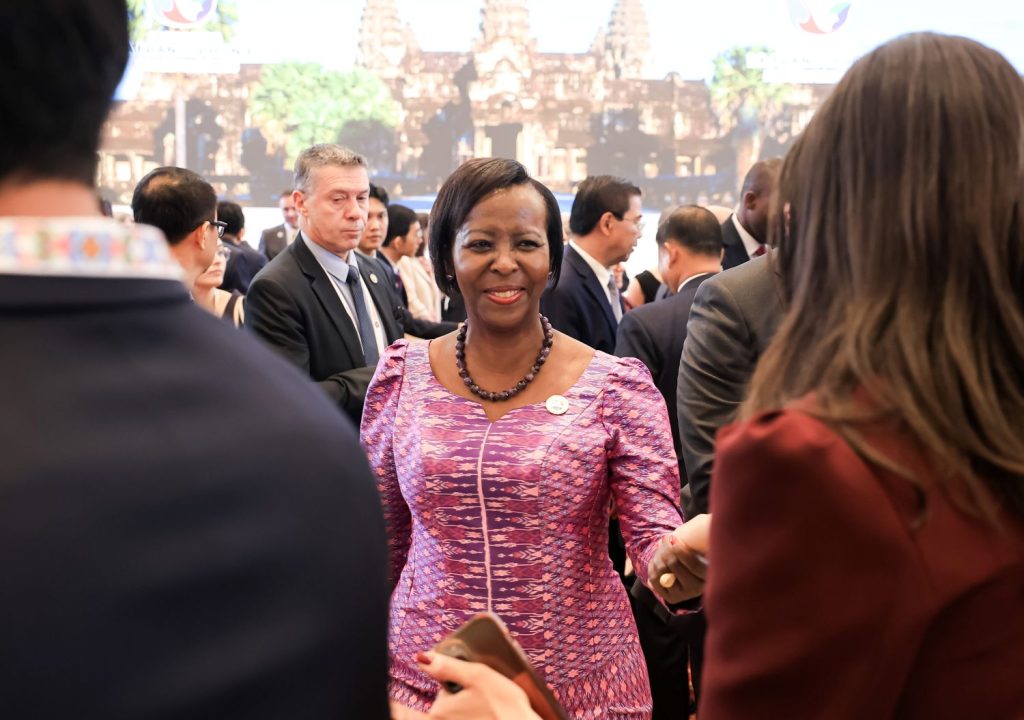
Mushikiwabo also acknowledged the need for changes, saying she would lead efforts to introduce new provisions governing elections during her additional year in office.
She said she would approach the reforms with renewed commitment while working to strengthen the organisation's position in the multilateral system.
"During this additional year, member states want to introduce new elements, particularly in the rules governing elections. I have said that I will take on this task with all the necessary energy to ensure that our organisation truly positions itself at the highest level in the multilateral world," she remarked.
Mushikiwabo also identified artificial intelligence, expanding successful initiatives and improving how the organisation makes and implements decisions as priorities for its future.
How the leadership deadlock unfolded
Mushikiwabo was seeking a third term after first taking office in 2018. Three candidates had remained in the race: Mushikiwabo, nominated by Rwanda; former Romanian Prime Minister Dacian Cioloș; and former Mauritanian minister Coumba Bâ.
The Democratic Republic of Congo (DRC) withdrew its candidate, Juliana Amato Lumumba, on November 14, 2026, and backed Cioloș, reshaping the contest ahead of the summit. The DRC had also threatened to withdraw from the OIF if Mushikiwabo secured another term, citing the conflict in the eastern DRC.
The closely watched election was also marked by diplomatic manoeuvring over Mushikiwabo's candidacy, including reported efforts by French President Emmanuel Macron to have her withdraw in favour of Cioloș.
Macron reportedly wrote to President Paul Kagame proposing Mushikiwabo's withdrawal. Similar overtures were reportedly made to the DRC and Mauritania.
Rwanda rejected the proposal, with Nduhungirehe insisting that member states had the right to nominate candidates without pressure from other countries.
Monday's compromise allows Mushikiwabo to remain at the helm for another year while overseeing reforms to the organisation's election procedures.
Loading comments...
Leave a comment