



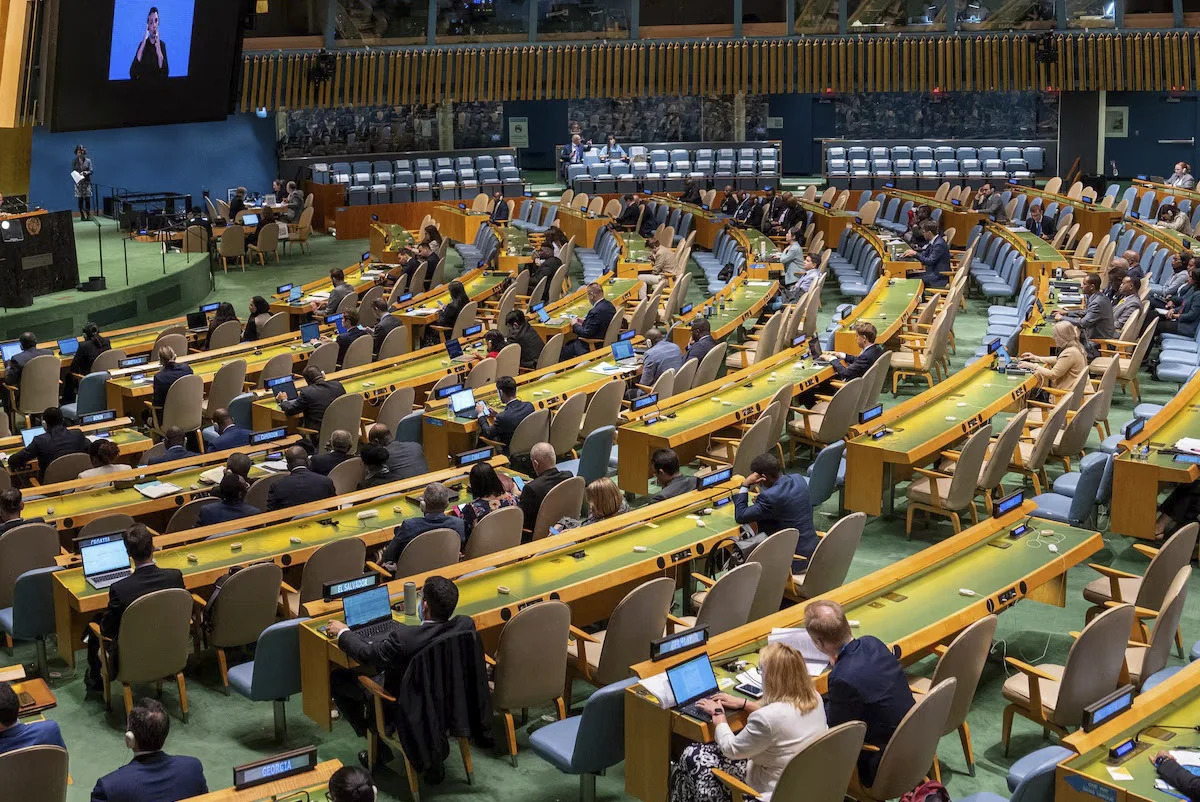
The declaration was adopted by the UN General Assembly on October 12, following negotiations co-facilitated by Rwanda’s Permanent Representative to the United Nations, Ambassador Martin Ngoga, and his Armenian counterpart, Ambassador Paruyr Hovhannisyan.
The negotiations sought to build consensus among member states on measures to prevent future pandemics, strengthen health systems and improve international cooperation following the challenges exposed by COVID-19.
Rwanda’s involvement reflects concerns President Paul Kagame has previously raised about the need to strengthen global preparedness and reduce inequalities in access to essential medical supplies.
Speaking at a roundtable on pandemic preparedness in May 2021, Kagame highlighted the importance of expanding vaccine production, particularly in Africa, where reliance on external suppliers can leave countries vulnerable during periods of global scarcity.
“So long as Africa remains dependent on other regions for vaccines, we will always be at the back of the queue whenever there is scarcity,” Kagame said.
He also called for stronger national health systems and greater attention to preventing diseases from spreading from animals to humans.
The president’s remarks came as countries were assessing the impact of COVID-19 and considering reforms to make the international response to future outbreaks more effective.
The UN declaration addresses several of these concerns, calling for stronger disease surveillance, investment in health systems, equitable access to vaccines and medicines, and sustainable financing for pandemic preparedness.
The declaration was adopted with 153 countries voting in favour, three against and two abstaining, according to reports on the UN vote.
Beyond its public health provisions, the process placed Rwanda in a facilitating role in negotiations involving countries with different priorities and expectations.
The declaration also calls for stronger local and regional manufacturing capacity, an issue that remains particularly relevant to African countries seeking to reduce dependence on imported vaccines, diagnostics and treatments.
However, adoption of the declaration is only one step towards stronger pandemic preparedness. Its impact will depend on whether countries translate the commitments into sustained investment, stronger public health systems and improved access to medical products.
Rwanda’s participation in the negotiations adds to its engagement in multilateral discussions on global health, while the implementation of the declaration will require continued cooperation among governments and international partners.
Loading comments...
Leave a comment