



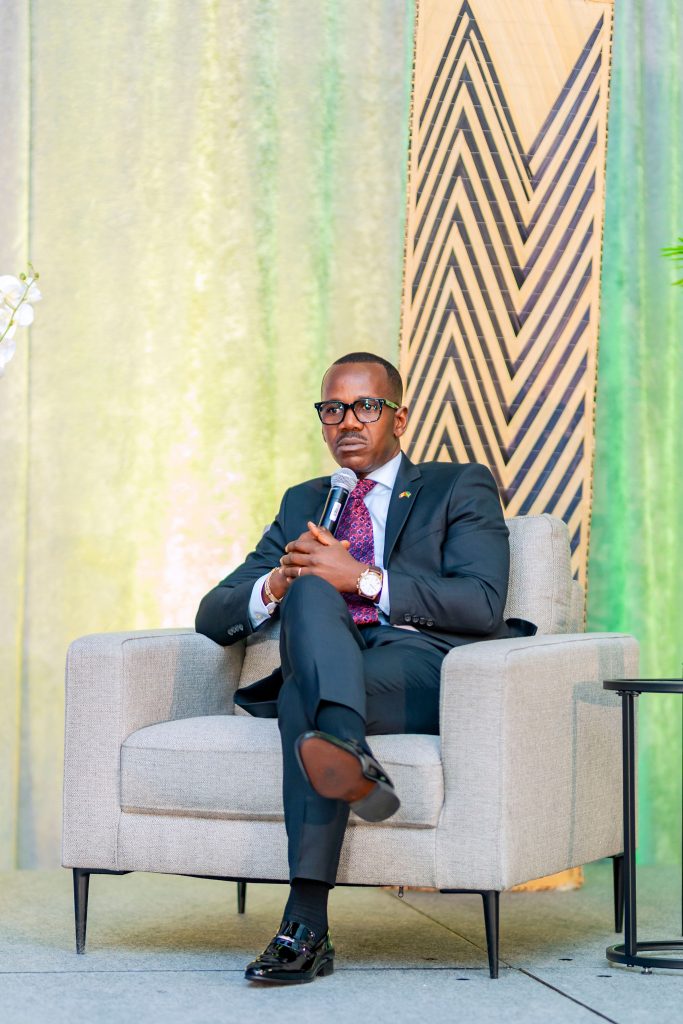
Uwizeyimana made the remarks on October 18, 2026, during an interview on Rwanda Broadcasting Agency (RBA), in which he discussed the possible implications of the formation of the Front pour la Refondation de la Nation (FRN), a political and military movement led by former DRC president Joseph Kabila.
Established on October 12, 2026, the movement replaced the AFC/M23 coalition, which has been fighting the government in Kinshasa.
Uwizeyimana said Tshisekedi had contributed to Kabila’s departure from the DRC but continued to put pressure on him during his exile, eventually pushing him to engage in political and military activities against the government.
“Kabila was pushed into a corner, to the point where he felt he had no other option. Tshisekedi played a role in the path Kabila chose because he was the one who pushed him into that position.
Kabila had lost everything and eventually received a death sentence. He decided to engage in both political and military warfare as someone who had nothing left to lose, because he had already lost everything he stood to lose,” Uwizeyimana said.
On September 30, 2025, the DRC’s High Military Court sentenced Kabila to death in absentia after finding him guilty of offences including treason and war crimes.
Uwizeyimana said that despite continued pressure from the Kinshasa government, Kabila retained financial resources and connections with influential figures internationally.
In the senator’s view, the main thing Kabila lacked was a military force, which he has now gained through his alliance with former members of AFC/M23.
“The army under Kabila was the DRC’s national army. Tshisekedi took control of it and gradually removed some of its members. He is the only person I have seen imprison more than 56 generals,” he said.
The senator said the alliance between Kabila and the former M23 movement benefited both sides.
Kabila gained a military force to support his struggle, while the movement gained an experienced politician with considerable influence in the DRC.
“Politically, no one has as much influence as Kabila. I cannot see a future for the DRC that does not involve him, and M23 has gained a highly influential figure,” he said.
Tshisekedi could find himself negotiating with Kabila
Uwizeyimana said one of the major challenges facing President Tshisekedi could be having to negotiate with Kabila, despite his administration having previously treated the former president as someone who should not be involved in political negotiations.
He believes the formation of FRN could require a reassessment of the Doha peace talks between the DRC government and AFC/M23, given the changes in leadership on the side opposing the government.
“The Doha talks are still ongoing, but the fact that they were being held with AFC/M23 does not mean they will automatically shift to FRN. The matter needs to be reconsidered.
It will not happen automatically because the other side is not a government that can simply continue from where it left off.
“Another issue is that Tshisekedi excluded Kabila from the list of people he was willing to negotiate with, yet Kabila is now the leader of FRN. Whether Tshisekedi accepts it or not, he will have to negotiate with Kabila, one way or another,” Uwizeyimana said.
In a statement issued on October 14, 2026, FRN announced that it had taken over AFC/M23’s responsibilities and agreements, including those related to the Doha peace talks.
Uwizeyimana believes Kabila could use his position within FRN to set conditions before entering negotiations with the Kinshasa government.
These could include seeking the reversal of the death sentence imposed on him, as well as other sentences handed down against individuals allied with him in leading FRN.
Could M23’s objectives change?
Although Uwizeyimana believes Kabila’s alliance with AFC/M23 has strengthened the forces opposing the Kinshasa government, he said the partnership could also raise questions about the direction of their struggle.
He explained that M23 initially said it was fighting for the rights of people who claim to face discrimination in their own country. However, Kabila’s involvement could broaden the movement’s objectives to include removing the current government from power.
Uwizeyimana added that Kabila could have a different view of how the DRC’s crisis should be resolved.
“Although I cannot speak for Kabila, he could tell them: ‘Why should we remain here when the problem is in Kinshasa? There is someone who will continue buying weapons and firing at us. Let us go and resolve the problem where it is,’” he said.
The senator believes this approach could change the direction of the struggle M23 initially said it was pursuing, shifting it from defending the rights of a section of the population towards a campaign to change the DRC’s government.
He said this would represent a significant shift because a conflict previously presented as a fight for people’s rights could instead come to be seen as a struggle for political power.
Kabila could also lose public trust
Uwizeyimana also warned that Kabila’s alliance with armed groups could have political consequences, particularly among Congolese citizens who may question why a man who served as president for 18 years has chosen to join forces with groups he previously opposed.
He said some people could question what Kabila intends to achieve for the DRC through his alliance with armed groups that he did not accomplish during his years in power.
The senator believes Kabila’s decision to ally with the fighters may have been the only option left to him after facing sustained pressure from Tshisekedi’s administration.
Uwizeyimana added that Kabila’s decision to join forces with former adversaries should not come as a major surprise, arguing that in politics, neither enemies nor friends are permanent, as shared interests can bring people together or drive them apart.
Loading comments...
Leave a comment