



The weekend operation marks the second consecutive day of U.S. military action and the sharpest deterioration in relations since Washington and Tehran signed a landmark memorandum of understanding (MoU) on June 18 designed to end months of hostilities.
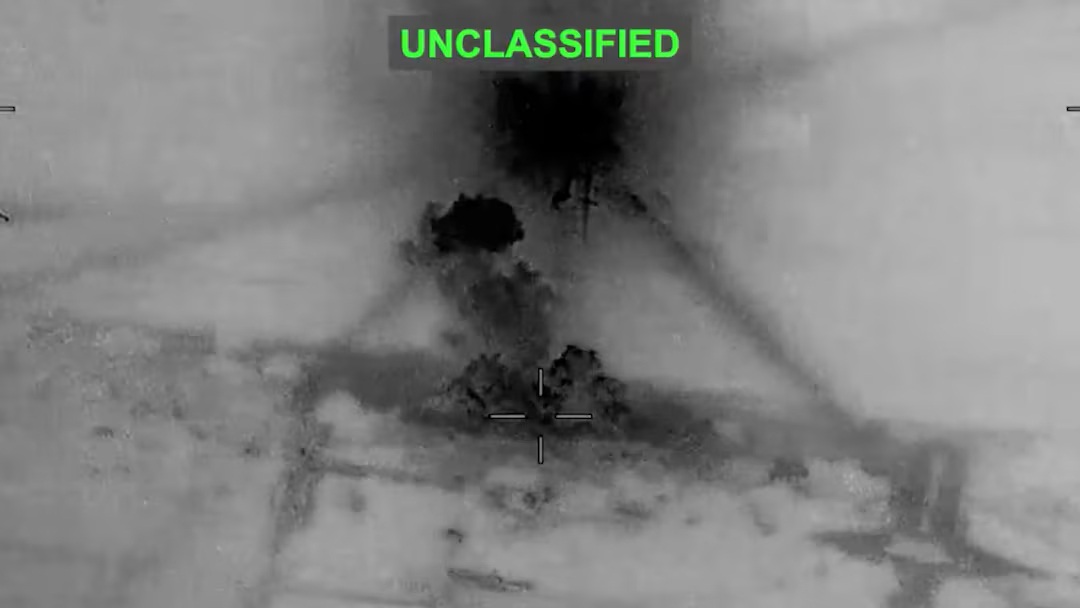
According to U.S. Central Command (CENTCOM), the latest strikes were ordered directly by President Donald Trump following a maritime attack early Saturday morning.
At approximately 4:30 a.m. local time, an Iranian one-way attack drone struck the M/T Kiku, a Panama-flagged oil tanker carrying more than two million barrels of crude oil from Qatar to the United Arab Emirates.
While the UK Maritime Trade Operations (UKMTO) reported that the M/T Kiku sustained damage to its bridge, all crew members were reported safe.
"Iran was given a chance to honour the ceasefire agreement but elected not to," CENTCOM said in an official statement, framing the subsequent operation as a direct response to continued aggression against commercial shipping in the vital energy corridor.
U.S. targets and Trump’s ultimatum
U.S. military aircraft targeted a broad array of assets, primarily focused along Iran's southern coastal regions and Qeshm Island. The precision strikes took aim at military surveillance infrastructure and coastal radar sites, command-and-control communication systems, air defence sites, drone and missile storage facilities, and minelayer capabilities used to disrupt commercial shipping.
Shortly after the operation concluded, President Trump issued a severe warning to Tehran on Truth Social, signaling that further non-compliance could lead to total conflict.
"United States aircraft just struck Iranian missile and drone storage locations… for violating the Cease Fire Agreement, AGAIN!" Trump wrote. "There may come a point when we are no longer able to be reasonable, and will be forced to militarily complete the job that we very successfully started. If that happens, the Islamic Republic of Iran will no longer exist!"
Vice President JD Vance echoed the firm stance on social media, writing, "Iran signed a ceasefire agreement. We have honoured it… But violence will be met with violence."
Iran retaliates against U.S. bases
The escalation quickly triggered a regional chain reaction. The Islamic Revolutionary Guard Corps (IRGC) announced it had launched a joint missile and drone operation targeting eight U.S. military sites across Kuwait and Bahrain.
In Bahrain, home to the U.S. Navy’s 5th Fleet, officials strongly condemned a "flagrant violation" of their sovereignty after several Iranian drones crossed into their airspace. A U.S. defence official confirmed that two one-way attack drones were detected approaching the Navy base; one was intercepted by ground defences, while the other landed harmlessly in a remote airfield area. No U.S. casualties or major structural damage were reported.
Meanwhile, Iranian state television reported that the IRGC had fired "warning shots" at merchant vessels attempting to pass through unauthorised channels, asserting that ships must now seek Iranian permits to traverse the Strait.
Mohsen Rezaei, a senior advisor to Iran's Supreme Leader, publicly accused Washington of violating the peace MoU by continuing to stoke tensions and supporting proxy actions.
The rapid back-and-forth has raised the maritime security threat level in the region to "substantial." The 14-point peace deal reached earlier in June had initially brought down global oil prices and mapped out a 60-day window for technical negotiations. With both sides now trading direct military blows, diplomatic processes appear to be on the verge of a total halt.
Loading comments...
Leave a comment