



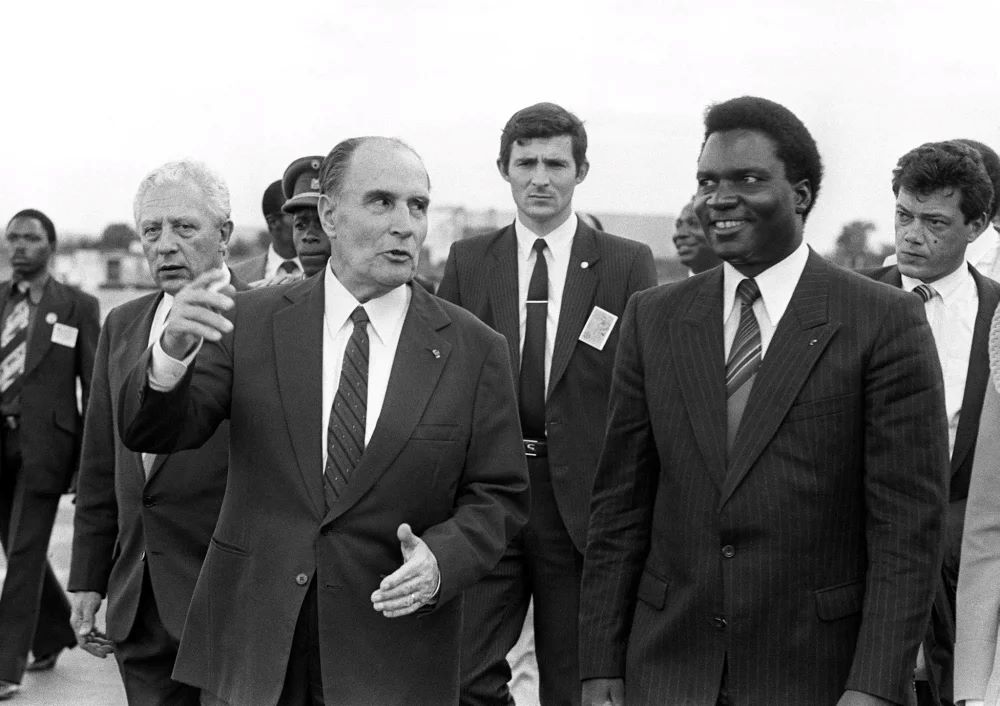
However, statements attributed to former French President François Mitterrand indicate that he did not believe the RPF had a motive to assassinate Habyarimana at a time when the Arusha Peace Accords were paving the way for the movement’s participation in government.
The aircraft carrying Habyarimana and Burundian President Cyprien Ntaryamira was shot down as it approached Kigali after the two leaders had attended a regional summit in Arusha, Tanzania.
At the time, Rwanda was implementing the Arusha Peace Accords, which were intended to end hostilities between the government and the RPF.
As part of the agreement, 600 RPA soldiers had already been deployed to the CND building in Kigali to protect RPF officials who were expected to join a broad-based transitional government.
The accords envisioned power-sharing arrangements that would integrate the RPF into state institutions, including the executive and legislative branches, while also providing for the integration of government forces and the RPA into a unified national army.
The assassination of Habyarimana, however, was followed by the Genocide against the Tutsi, during which more than one million people were killed in a period of 100 days.
Records from a French Cabinet meeting held on June 22, 1994, show that Mitterrand regarded Habyarimana as a central figure in Rwanda’s political transition.
According to the meeting notes, France had supported the Rwandan government while encouraging negotiations with the RPF through the Arusha process.
Mitterrand reportedly noted that the agreements reached in Arusha appeared favourable to the RPF, which was on the verge of entering government institutions.
For that reason, he suggested that the assassination may have been the work of Hutu hardliners opposed to the peace process.
Similar conclusions have appeared in other accounts. A previously classified report by the United States Central Intelligence Agency (CIA) reportedly indicated that the attack on Habyarimana’s aircraft may have been carried out by extremist elements within the former government forces, including members of the presidential guard.
The report also alleged that those groups had access to anti-aircraft weapons capable of carrying out such an operation.
This was also explored in Stepp’d in Blood: Akazu and the Architects of the Rwandan Genocide Against the Tutsi, a book by investigative journalist Andrew Wallis.
According to Wallis, individuals within the president’s inner circle feared losing political influence as Habyarimana moved toward implementing the Arusha agreements.
Wallis writes that, two days before the plane crash, Habyarimana informed his chief of staff, Enoch Ruhigira, that preparations should begin for the swearing-in of a new government that would include a broader range of political actors rather than members of the Akazu network alone.
The author argues that the proposal alarmed influential figures close to the president, prompting urgent consultations among senior military officers and political allies who opposed the power-sharing arrangement.
Mitterrand also maintained that French troops deployed in Rwanda should focus on protecting civilians rather than becoming involved in combat operations.
Nevertheless, France’s role during the conflict has remained the subject of intense debate. Critics have long argued that French forces worked closely with the former Rwandan army during the conflict and later facilitated the escape of some perpetrators of the Genocide against the Tutsi.
Operation Turquoise, launched by France in June 1994, involved approximately 2,500 troops deployed in southwestern Rwanda.
While France has described the mission as a humanitarian intervention, critics argue that it created a corridor through which members of the former army and Interahamwe militia fled into what is now the Democratic Republic of the Congo.
Loading comments...
Leave a comment