



The organisation, which brings together 90 states and governments, operates programmes covering French-language promotion, education, cultural diversity, democracy, economic cooperation and sustainable development.
Its activities are financed through mandatory contributions from members, voluntary donations and other revenue, with some governments also providing funding for specific projects.
According to its revised 2026 budget, approved during the 46th session of the Conference of Francophonie Ministers in Kigali in November 2025, the organisation plans to spend 71.7 million euros (approximately Rwf122 billion), a relatively modest budget for an institution whose mandate spans 90 states and governments and covers French-language promotion, education, cultural diversity, peace, democracy, economic cooperation and sustainable development.
Of this amount, 46.6 million euros comes from statutory contributions, while voluntary contributions to its Unified Multilateral Fund (FMU), which finances cooperation programmes, are projected at 13.5 million euros.
The budget also includes 2.8 million euros in other revenue and an allocation of 8.8 million euros from the organisation's reserves.
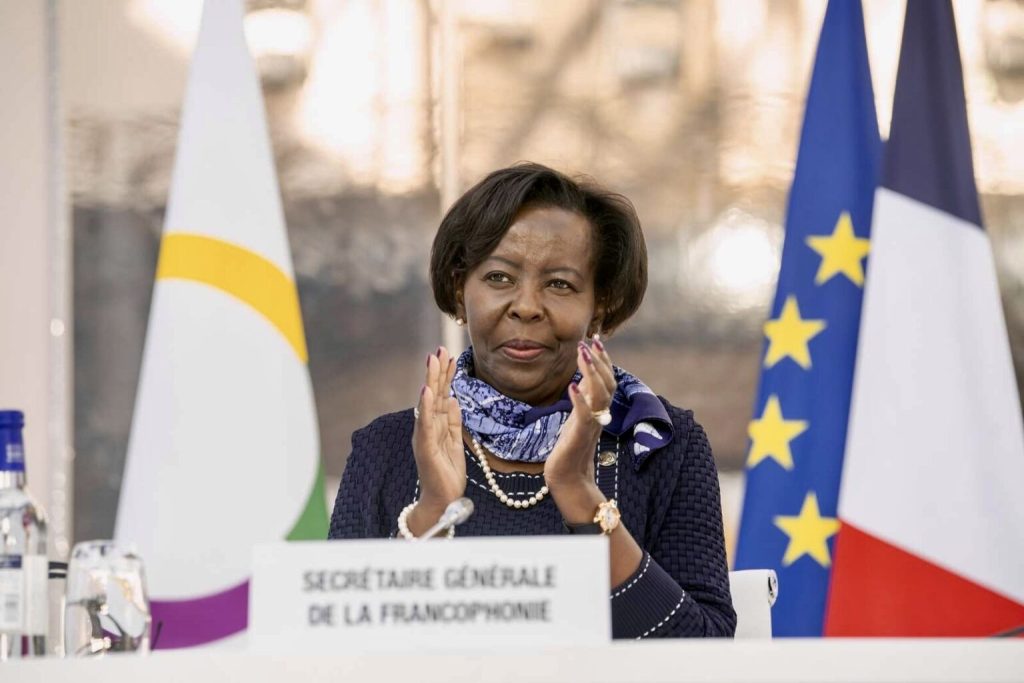
France and Canada among biggest contributors
France and Canada are among the most significant financial backers of the wider Francophonie institutions.
Canada's government identifies it as the second-largest contributor after France, with financial support totalling nearly C$43 million in the 2025/2026 financial year.
The amount comprises approximately C$16.5 million in statutory contributions and C$25 million in voluntary contributions. It supports institutions across the Francophonie network, including the OIF, rather than the OIF alone.
Canada has openly acknowledged that its engagement goes beyond promoting the French language, describing the Francophonie as a "privileged platform to promote our interests and to build and strengthen strategic partnerships, without the presence of major powers".
The statement, contained in a Global Affairs Canada parliamentary briefing, offers an insight into how major contributors view the organisation as a vehicle for advancing their diplomatic interests.
Canada also wants the Francophonie to play a greater role in economic cooperation, particularly in trade and investment.
In the same briefing, the government said it would focus on ensuring that the organisation's institutions foster "an environment conducive to entrepreneurship, trade, and investment within member countries".
Its financial engagement also supports programmes relating to democracy, human rights, education, gender equality and cultural diversity in the digital space.
France, meanwhile, remains the largest financial contributor and has historically played a central role in the development of the Francophonie's institutions.
Its support extends to the organisation's general operations and programmes covering education, cultural production, digital transformation, climate resilience and democratic governance.
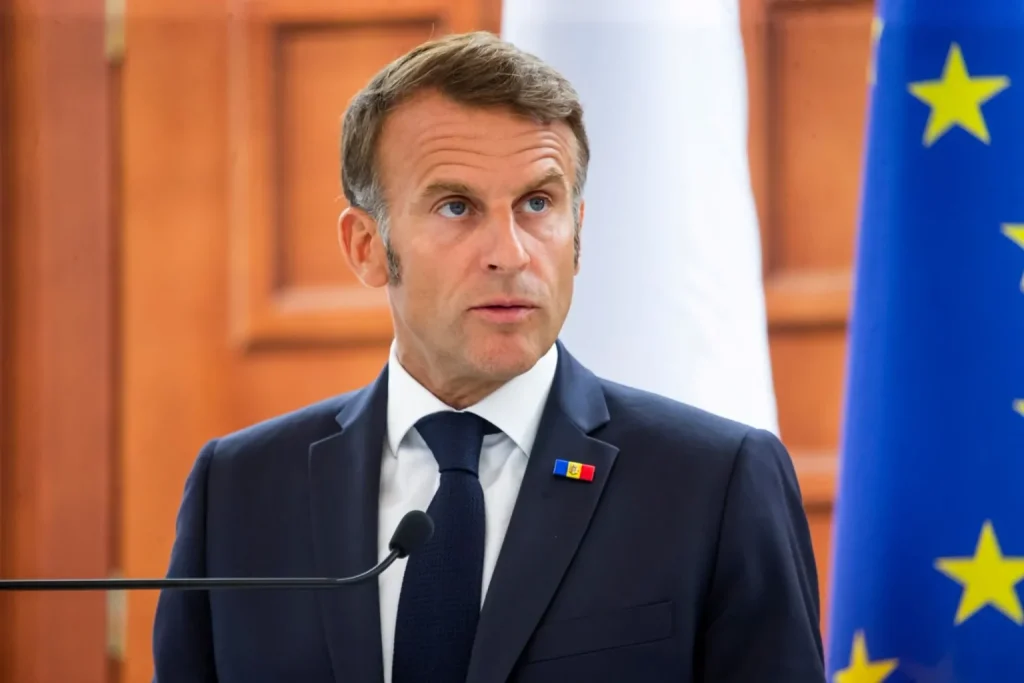
Does financial contribution translate into influence?
The financial weight of major contributors raises questions about their influence over the organisation's priorities and direction.
Countries providing substantial resources can support specific programmes, contribute to institutional development and maintain a visible presence across the Francophonie's activities.
Canada's influence, for instance, is reinforced by the participation of Quebec and New Brunswick as full member governments, alongside Ontario and Nova Scotia, which hold observer status.
The Canadian government explicitly identifies this wider participation as a factor strengthening its influence within the organisation.
It also has a significant institutional presence, with several Francophonie bodies headquartered in Canada, including the University Agency of La Francophonie in Montreal and OIF offices in Quebec City.
The country has also held senior positions within the organisation's institutions and supports French-language broadcasting through its contributions to TV5MONDE.
Canada has further indicated that it expects the institutions to operate effectively and accountably.
"Through advocacy, diplomacy, and concrete action, we are continually working to improve the effectiveness and accountability of La Francophonie institutions," the government said in a June 2026 parliamentary briefing.
Such expectations illustrate how financial support can be accompanied by demands for institutional performance and accountability.
However, financial contributions do not automatically translate into additional voting power in the election of the Secretary-General.
The OIF has 53 full members entitled to participate in the election, while five associate members and 32 observers do not have voting rights.
The Secretary-General is selected by heads of state and government representing the full members during the Francophonie Summit. They first seek to reach consensus, with a vote held if they fail to agree.
This means that countries contributing substantial financial resources still need political support from other eligible members to determine who leads the organisation.
What does the money finance?
The OIF's 2026 budget allocates the largest share of its expenditure to programmes and cooperation activities.
Of the 71.726 million euros budgeted, 48.916 million euros is earmarked for programming, covering strategic priorities and other activities, including education, economic cooperation, cultural diversity and governance.
Another 20.73 million euros is allocated to operational costs, including institutional personnel and administrative support.
The organisation has also allocated 1.05 million euros to institutional structures and 1.03 million euros to investments.
Beyond its main budget, voluntary contributions channelled through the Unified Multilateral Fund help finance specific cooperation initiatives.
Governments can also support projects through additional funding, allowing them to advance priorities that align with their development and foreign policy objectives.
In March 2026, for example, Canada committed C$20.8 million in long-term institutional support to the OIF over four years, covering the period from 2025/2026 to 2028/2029.
The funding supports programmes promoting French-language content, democratic governance, human rights, education, trade and economic resilience, particularly among young people and women.
A financial stake in the next four years
The funding structure will be an important consideration for whoever takes over the organisation for the 2027–2030 term.
The next Secretary-General will oversee an institution expected to balance its traditional mandate of promoting the French language with broader priorities, including economic cooperation, digital transformation, education and international diplomacy.
Maintaining the confidence of major financial contributors while ensuring that programmes respond to the needs of smaller and less economically powerful members will be part of that responsibility.
The November 16 election will pit incumbent Louise Mushikiwabo of Rwanda against Juliana Amato Lumumba of the Democratic Republic of Congo, Coumba Bâ of Mauritania and Dacian Cioloș of Romania.
Although major contributors do not receive additional votes because of the resources they provide, their financial commitments give them a significant stake in the organisation's priorities, effectiveness and future direction.
The challenge for the next Secretary-General will be to ensure that the Francophonie remains a platform for cooperation among its members, with its programmes reflecting the collective interests of the organisation rather than primarily the financial weight of a few governments.
Loading comments...
Leave a comment