



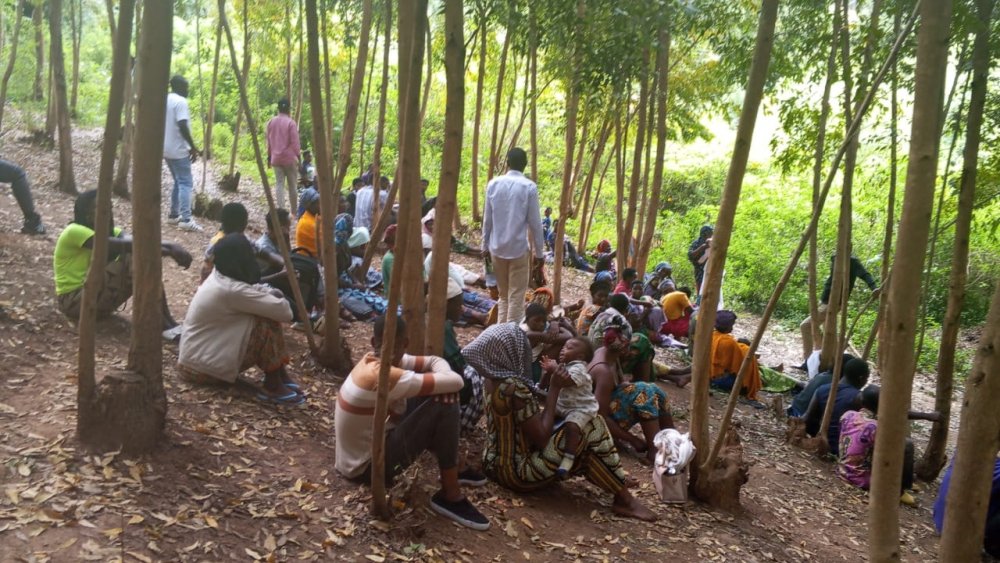
The arrests were made on Friday, June 5, 2026. Of those detained, 46 were found in Kigabiro Sector, Cyanya Cell, inside a forest where worshippers had nicknamed the site “Senga usubizwe” (Pray and be answered).
Among the 46 were 12 men and 34 women, including 10 nursing mothers. Ten students who were preparing for national examinations were also among those arrested after reportedly skipping school to pray, hoping for good results.
Another group of 22 people was arrested in Gahengeri Sector, Kagezi Cell, at Samatare rock site. The area had previously been sealed off by authorities using concrete due to safety concerns, but worshippers reportedly broke through the structure to access the site. Five nursing mothers were among those detained.
The Vice Mayor of Rwamagana in charge of Economic Development, Kagabo Rwamunono Richard, told IGIHE that those arrested were found praying in different illegal locations, with most coming from Rwamagana and others from Kayonza, Nyagatare, and Gatsibo districts.
“Most of them are from Rwamagana, but others came from Kayonza, Nyagatare, and Gatsibo. These are not authorized worship sites. They are forest areas that pose serious risks to their safety. We also found others at Samatare rock, which we had closed because it is dangerous. It is unfortunate that people choose such places to seek God,” he said.
He also accused the group of defying government decisions and damaging infrastructure that had been put in place for their protection.
He cited Samatare cave, where the government reportedly spent over Rwf3 million to secure the site and prevent accidents.
“Our message is that God is not found in caves or forests, and certainly not in places that endanger lives. The government does not allow such practices. Everyone should use recognized places of worship. Churches are available,” he said.
Authorities said the arrested individuals are currently undergoing civic education. They also indicated that the suspects may be required to pay for the damaged infrastructure and could face penalties for defying government directives and mobilizing others to do the same.
In 2024, during the Marburg virus outbreak in Rwanda, the Ministry of Health reported that the first patient was believed to have been infected through bats found in a mining cave near Kigali.
Since then, several cave sites across the country have been closed or reinforced. At Samatare rock, where some of the worshippers were arrested, authorities had previously spent more than Rwf3.3 million reinforcing the site for public safety, before it was damaged again by those accessing it for prayer.
Loading comments...
Leave a comment