



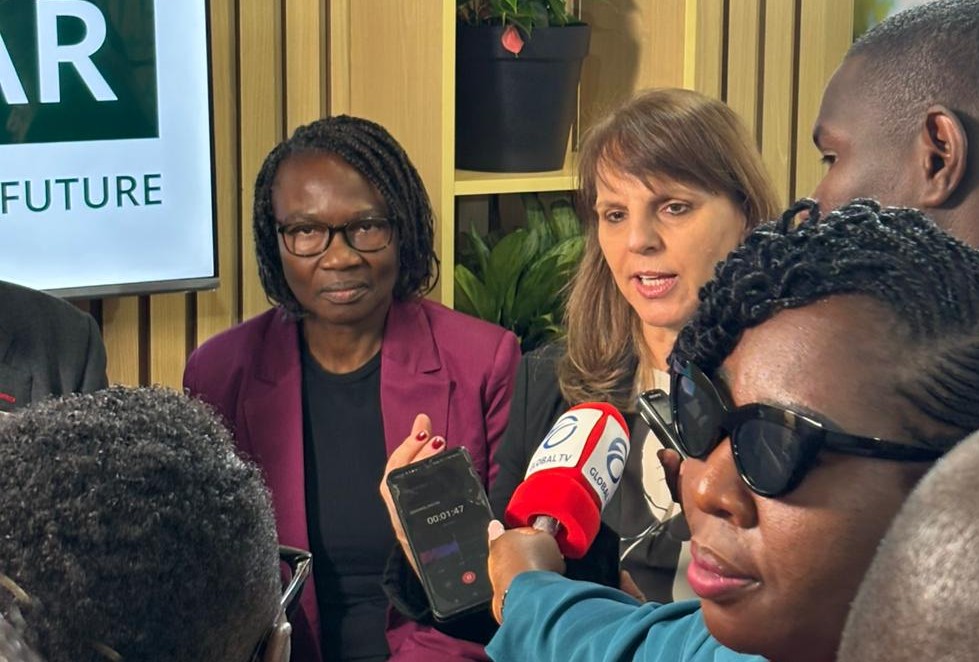
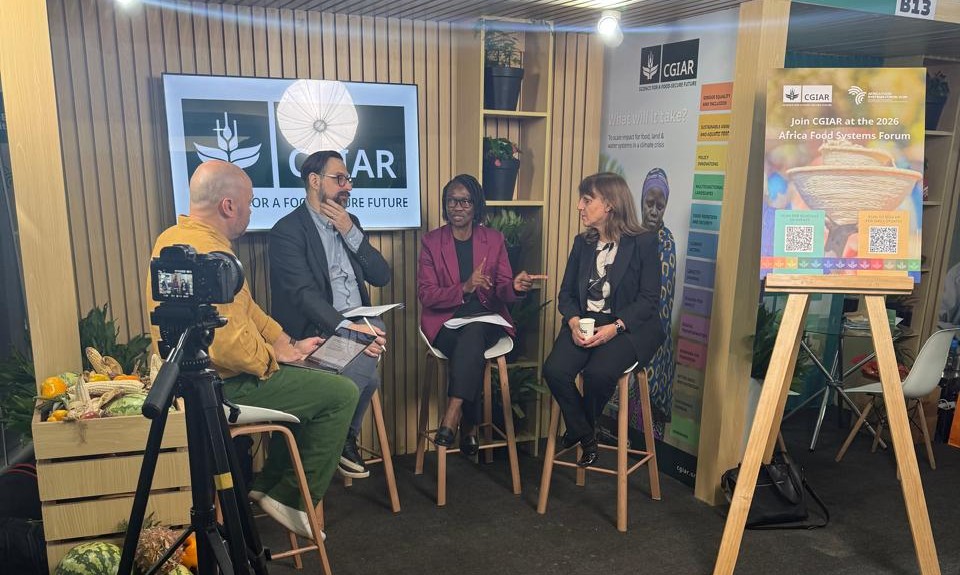
The approach was highlighted by CGIAR Chief Scientist Dr. Sandra Milach during a press briefing on the sidelines of the Africa Food Systems Forum in Kigali, where she outlined how research is being connected to practical interventions in Rwanda's food system.
Milach explained that CGIAR is working closely with the Rwandan government on school meals, using evidence to determine how locally available foods can contribute to healthier diets while keeping meals affordable.
“We know what it takes to do a healthy plate, but can we afford it?” she posed on Wednesday, highlighting affordability as a central consideration in efforts to improve nutrition.
The work involves examining Rwanda's food supply, determining what a nutritious and affordable plate should contain and generating evidence that can inform government policy and programmes.
According to Milach, aspects of the school meals programme are currently being implemented in about 195 schools and have reached more than 300,000 children.
She noted that the benefits could extend beyond nutrition, as healthier school meals can support education by helping children remain in school while contributing to their overall wellbeing and, ultimately, the country's economic development.
The initiative also seeks to connect demand from schools with local agricultural production, including the cultivation of nutrient-rich crops such as high-iron beans.
Through the Alliance of Bioversity International and CIAT and the Pan-Africa Bean Research Alliance (PABRA), CGIAR supports efforts to make high-iron bean varieties available to school gardens and local farming communities, linking research on nutrient-rich crops with food production and school meals.
CGIAR Director of Scaling for Impact Dr. Tim Krupnik pointed to high-iron beans as an example of how school feeding can be used to strengthen an entire agricultural value chain.
Rather than viewing school feeding simply as the delivery of food to children, Krupnik explained that the approach can create a reliable market for farmers producing nutritious crops, allowing food to move from farms through the value chain and onto school plates.
“It’s not just about the supply of food to schools to provide more nutritious meals; it’s about utilizing that as an opportunity to go the whole way back to a farm,” he remarked.
Closing the gap between research and farmers
The Rwanda example forms part of a wider shift within CGIAR towards ensuring that agricultural research is designed with its eventual use and scale in mind.
Krupnik pointed out that Africa does not lack agricultural innovations. The greater challenge, in many cases, is taking proven technologies from research and development into widespread use by farmers.
Researchers, he argued, need to consider from the outset whether farmers and businesses will have access to finance, whether there will be sufficient market demand and awareness, and whether an innovation is suited to different groups, including women and young people.
“If scientists develop an innovation without thinking about how they would drive it into scale later on,” he cautioned, “the innovation and research stage” can fail to address the obstacles that emerge when the technology reaches the market.
The CGIAR Scaling for Impact programme is intended to address those gaps by assessing whether an innovation is ready, identifying suitable partners and establishing links with private-sector investment before technologies are pushed towards large-scale adoption.
For Rwanda, the school feeding initiative provides an example of how research can be connected to nutrition, agriculture and education rather than remaining within research institutions.
Rwanda's approach to agricultural recommendations
CGIAR's Head of the Liaison Office for Africa, Dr. Namukolo Covic, also singled out Rwanda's approach to implementing recommendations emerging from agricultural reviews.
Covic noted that the Comprehensive Africa Agriculture Development Programme (CAADP) process includes biennial reviews that identify areas where countries are making progress and where bottlenecks remain.
The challenge, she observed, is that countries often identify these obstacles but fail to invest in addressing them.
Rwanda, however, stands out in the process because its joint review mechanism brings recommendations back into the country and brings different sectors together to determine how the identified challenges can be addressed.
“What we have seen, though, is that those countries that actually take those recommendations and go and act on them have actually done better,” Covic remarked.
She stressed that African countries also need greater investment in agricultural research. Countries have long been encouraged to commit at least one percent of their agricultural gross domestic product to research, but investment remains well below that level across the continent.
Research, she argued, should also receive predictable, long-term funding rather than being treated as a one-off intervention because agricultural challenges are constantly changing.
Climate change, in particular, means that innovations that work today may not necessarily remain effective in the future, creating a need for a continuous pipeline of research and technologies.
From farms to school plates
The focus on high-iron beans illustrates the broader effort to connect agricultural science with practical food and nutrition outcomes.
By linking nutrient-rich crops with school meals, the approach has the potential to address several challenges at once: improving children's diets, creating markets for farmers and strengthening demand for locally produced food.
For Rwanda, the 195 schools and more than 300,000 children reached by the programme offer a significant platform for testing how research can inform food policy and translate into outcomes beyond the laboratory.
Milach maintained that the wider objective is not to identify a single innovation capable of solving Africa's food challenges, but to apply a systems approach that brings together research, farmers, markets, government and private investment.
That approach, she suggested, could help Rwanda and other African countries move from producing agricultural innovations to ensuring that those innovations deliver measurable benefits to the people and communities they are intended to serve.
Loading comments...
Leave a comment