






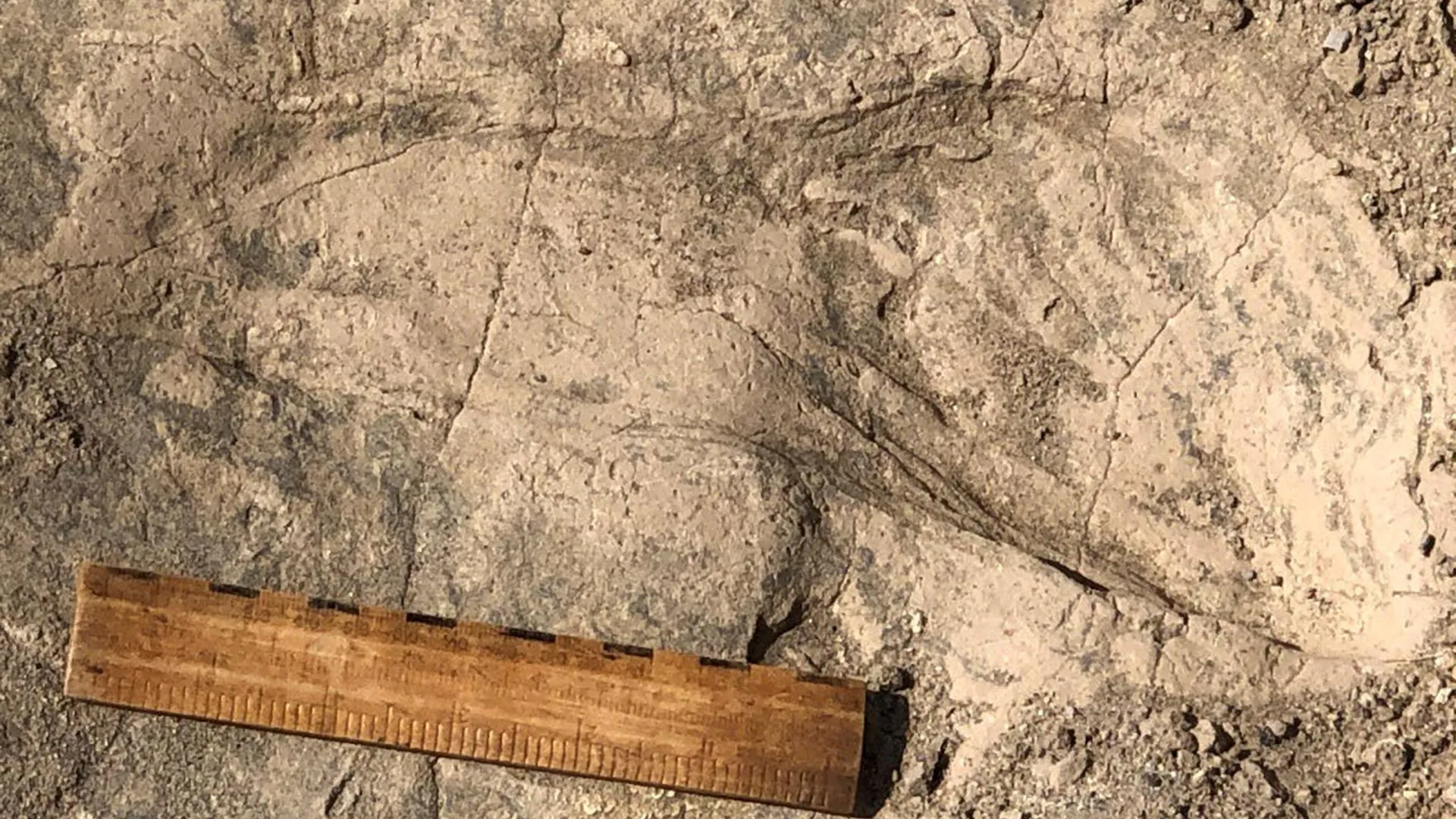
The footprints, preserved near an ancient lakeshore, appear to belong to eight individuals of Paranthropus boisei who may have been travelling together at roughly the same time.
Researchers from the United States and Kenya believe all eight individuals were adults. More importantly, the footprints suggest that some members of the species were much larger than previously estimated.
According to the researchers, the footprints indicate that some Paranthropus boisei individuals may have reached about 1.8 metres in height and weighed around 75 kilograms, giving them body sizes comparable to those of modern humans.
For decades, most fossils of Paranthropus boisei have consisted of skulls, including specimens with large jaws and teeth.
Because remains from other parts of the body are much rarer, scientists have had limited information about the species' overall body size.
The newly discovered footprints are therefore providing important evidence that challenges earlier estimates suggesting that Paranthropus boisei was considerably smaller than Homo erectus, another human relative that lived during the same period.
The footprints also offer clues about the social behaviour of the species. Researchers found that the eight individuals appeared to have travelled together, and most were likely adult males. There was no clear evidence of females or children among the group.
Scientists say this could indicate a more complex social structure than previously understood.
The individuals may have lived in larger groups in which males competed for mates but sometimes travelled together for protection in potentially dangerous environments.
The discovery is part of a larger collection of hominin footprints found around Lake Turkana.
Researchers have documented hundreds of footprints at more than six sites in the region, highlighting the importance of ancient lakeshores to early human relatives.
Scientists believe these environments provided important resources that repeatedly attracted hominins over long periods.
The research demonstrates that fossil footprints can reveal information that bones alone cannot, including body size, movement, group behaviour and the environments in which ancient human relatives lived.
Researchers plan to continue investigating the footprint sites in Kenya, hoping to uncover more evidence about human evolution during the Early Pleistocene.
Loading comments...
Leave a comment