



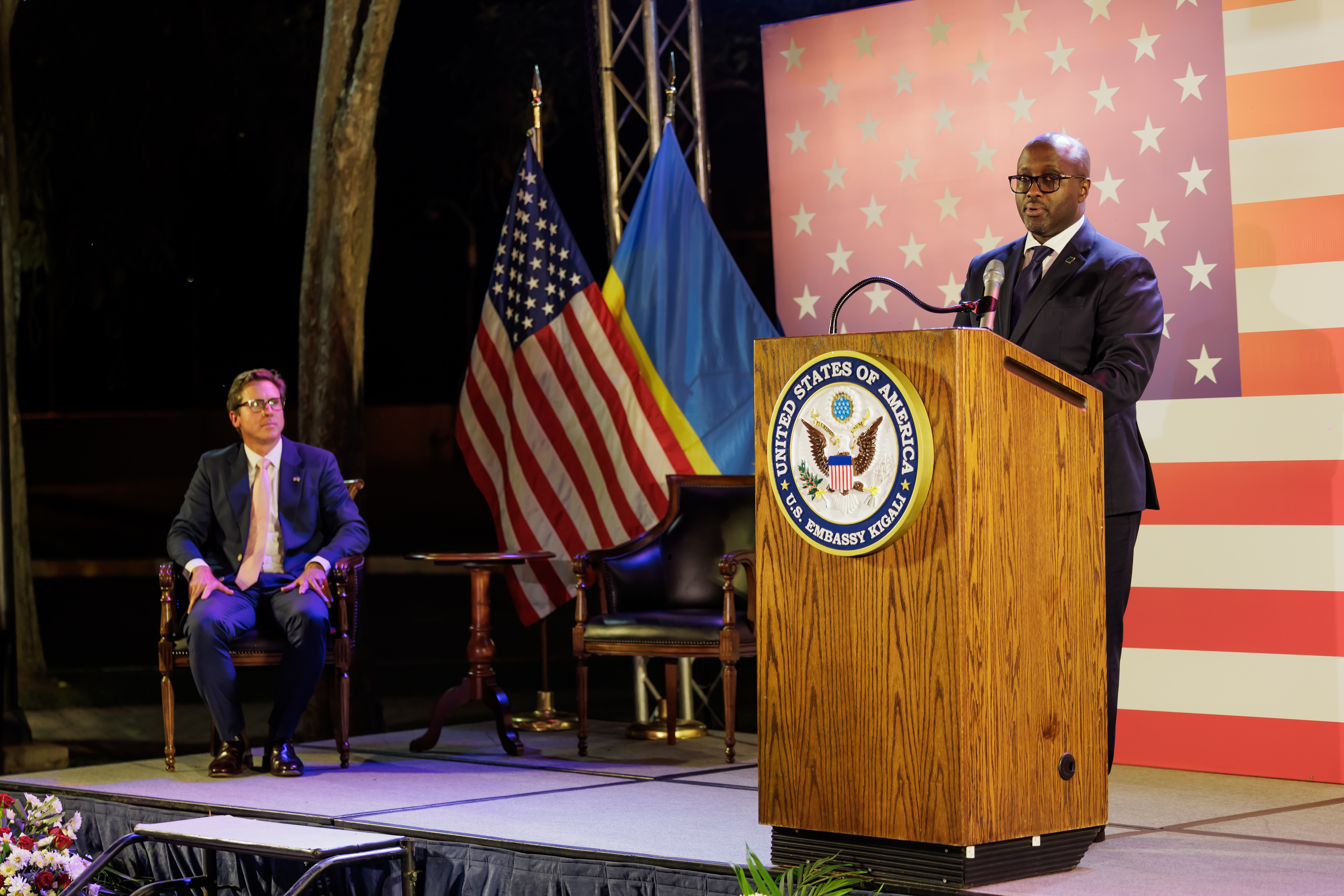
Speaking during celebrations marking the 250th anniversary of U.S. independence at the U.S. Embassy in Kigali on Thursday, June 5, 2026, Rwanda’s Minister of Foreign Affairs and International Cooperation, Olivier Nduhungirehe, said Kigali is keen to transform existing diplomatic commitments on space cooperation into practical initiatives that support scientific advancement, skills development and economic growth.
“As a member of the Artemis Accord community, Rwanda remains keen to explore practical avenues of collaboration with NASA and looks forward to identifying mutually beneficial initiatives that can contribute to scientific advancement, capacity building, and economic development,” Nduhungirehe said.
The remarks come at a time of massive momentum for the global space program. Just two months ago, in April, NASA successfully completed its historic Artemis II mission, sending a crew of four astronauts around the Moon and back in humanity's first crewed lunar flight in over 50 years.
With NASA now actively planning its upcoming Artemis III surface landing and laying the groundwork for a permanent lunar base, signed partners like Rwanda are looking to secure their footing in the emerging lunar economy.
For Rwanda, these developments align with efforts to position itself as a regional hub for emerging technologies and innovation. Space cooperation was highlighted alongside other strategic sectors where Rwanda and the United States are expanding engagement, including critical minerals, advanced technologies and civil nuclear energy.
Rwanda became the first African country, alongside Nigeria, to sign the Artemis Accords during the first-ever U.S.-Africa Space Forum held on the sidelines of the U.S.-Africa Leaders Summit in late 2022.
The Accords establish principles for responsible and peaceful exploration of outer space. Signatories commit to measures including the public release of scientific data, responsible debris mitigation, registration of space objects and the adoption of interoperability standards.
As NASA transitions from test flights to building long-term infrastructure on the Moon, current bilateral discussions are focused on translating this framework into tangible cooperation, particularly in areas such as technical training, capacity building, and the development of local space-related technologies.
The planned collaboration reflects the broader evolution of Rwanda-U.S. relations. Last year, the two countries launched the first Rwanda-U.S. Strategic Bilateral Dialogue, creating a platform for cooperation across health, trade, security, education, technology and investment.
Nduhungirehe noted that both countries are increasingly looking toward sectors that will shape future economic growth and innovation. He also pointed to recent progress in civil nuclear energy cooperation following the signing of a Memorandum of Understanding on Strategic Civil Nuclear Energy Cooperation during the Nuclear Energy Innovation Summit for Africa held in Kigali in May.
The United States’ Chargé d’Affaires ad interim to Rwanda, John Armiger, said the partnership between the two nations continues to evolve and deepen, describing Rwanda as a valued partner as both countries work toward a “peaceful and prosperous future.”
For Rwanda, closer engagement with NASA would mark another step in its efforts to leverage science and technology as drivers of development, while strengthening ties with one of its key strategic partners.





Loading comments...
Leave a comment