



STAR.VISION, an AI-native aerospace company headquartered in Hangzhou, Zhejiang Province, China, specialises in developing intelligent satellite systems that integrate artificial intelligence to process and analyse information while still in orbit.
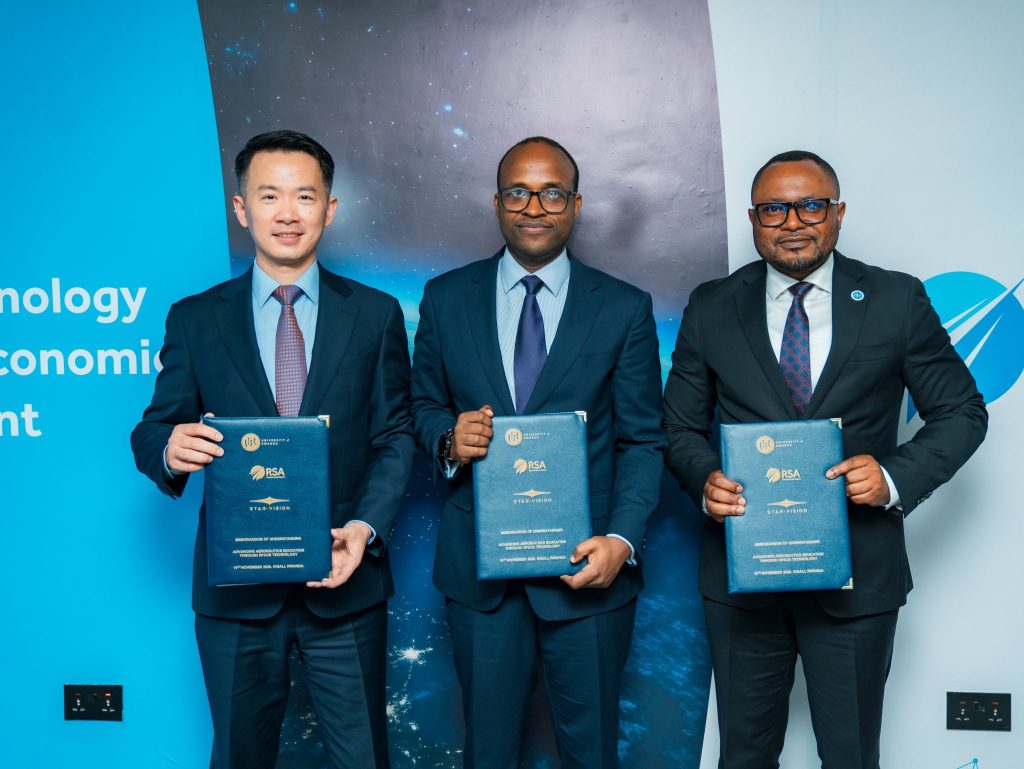
The partnership will give Rwandan students and researchers access to the company's satellite Earth observation data, simulation tools, technical expertise and training, as well as opportunities to participate in joint research and technology development.
The agreement places particular emphasis on on-orbit AI, a technology that enables satellites to analyse information in space before transmitting relevant results to ground stations. Its applications include agriculture, mining, flood monitoring, fire detection and urban planning, among other areas where satellite information can support decision-making.
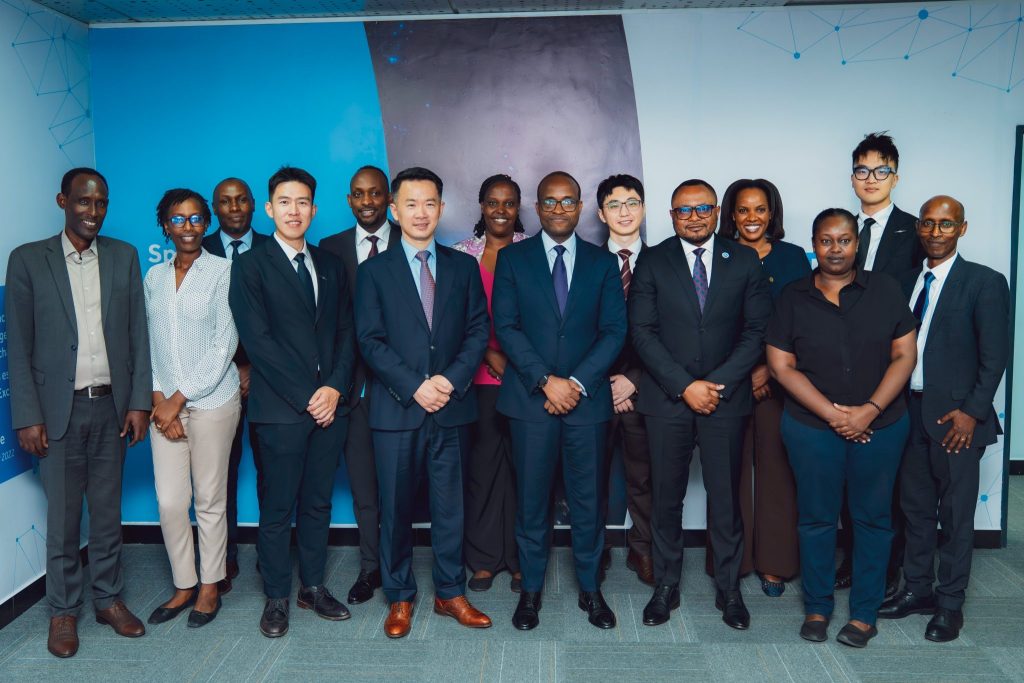
Through the collaboration, the three institutions intend to strengthen Rwanda's capacity in space science and technology by connecting academic research with practical applications and expertise from the aerospace industry.
The partnership will also promote knowledge and technology transfer, develop local expertise and equip students and researchers with practical digital and space-related skills.
The Rwanda Space Agency described the agreement as an important step towards strengthening the country's human resource and research capacity in the space sector.
“This partnership marks an important step towards strengthening Rwanda’s space talent and research capacity, providing students and researchers with access to practical space technologies, expertise, satellite data, and advancing AI-driven applications,” the agency said.
The agreement builds on previous cooperation between STAR.VISION and Rwanda in 2023, particularly through the Rwanda Space Agency and Rwandan students, who have already participated in developing AI applications for satellite technology.
During a recent interview with IGIHE at the company's headquarters in Hangzhou, Curtis Ma, Director of Global Alliance at STAR.VISION, explained how the company integrates artificial intelligence into its satellites to improve the speed and usefulness of information obtained from space.
“When we say AI-native, it means that all of the satellites we have launched so far are equipped with AI payloads,” Ma said.
He explained that conventional satellite data processing could take two to three days before information reached users, whereas AI-powered edge computing enables satellites to analyse images directly in orbit and transmit relevant information much faster.
“We can now receive data within an hour,” he said.
The expanded partnership with Rwanda is expected to build on this technological approach by creating more opportunities for local researchers and students to participate in developing and applying AI-powered satellite solutions.

Loading comments...
Leave a comment