



As society demands faster and more complex computing power, the search for hyper-efficient alternatives has never been more urgent.
Superconductor materials capable of conducting electricity with zero resistance and zero heat loss have long been envisioned as the ultimate solution to this energy crisis.
However, their practical application has historically been restricted by the extreme, cost-prohibitive cold they require to operate and their frustrating vulnerability to magnetic fields.
A ground-breaking study published in Nature Communications by researchers at Chalmers University of Technology in Sweden offers a paradigm-shifting solution to these limitations.
Instead of trying to alter the complex, notoriously stubborn chemical composition of superconducting materials themselves, the research team shifted their focus entirely.
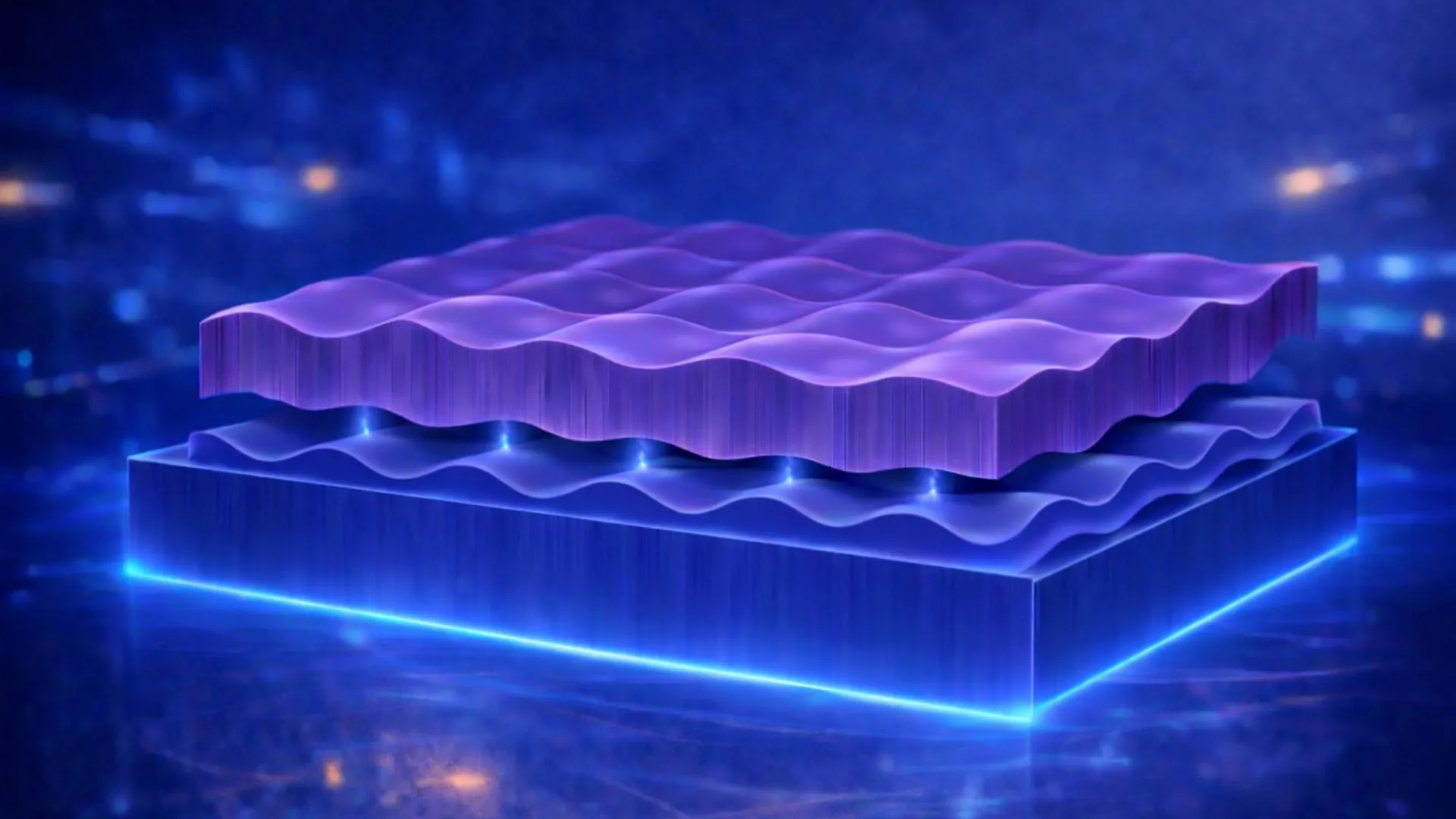
They decided to engineer the foundation beneath them. By making precise nanoscale modifications to the substrate material before depositing an ultrathin layer of a high-temperature cuprate superconductor, the team fundamentally reshaped the material's electronic behavior.
Using a specialized high-temperature vacuum treatment, the scientists sculpted a microscopic pattern of ridges and valleys on the substrate surface, measuring less than one-millionth the thickness of a human hair. When the superconducting atoms settled onto this textured foundation, the nanoscale topography guided their structural arrangement.
This atomic alignment created a tailored electronic interface that effectively stabilized the material.
As a result, the ultrathin film maintained its robust superconducting state at significantly higher operational temperatures than previously achieved, while demonstrating a newfound resilience against disruptive magnetic fields.
This breakthrough addresses a major bottleneck in quantum device development and power grid innovation, where stray magnetic fields frequently collapse zero-resistance states.
By proving that subtle physical alterations at the substrate level can drastically enhance performance, the Chalmers University team has introduced an entirely new design principle for quantum materials.
Rather than hunting for elusive new chemical elements, engineers can now use surface architecture to unlock the full potential of next-generation, energy-efficient electronics, bringing us one step closer to a zero-loss digital future.
Loading comments...
Leave a comment