



The achievements were highlighted on September 30, 2026, during the official closing of the three-year project, which was implemented in Rubavu, Musanze, Gatsibo and Huye districts.
The closing event brought together officials from line ministries, vice mayors in charge of social affairs from the four districts, representatives of the private sector, development partners and beneficiaries.
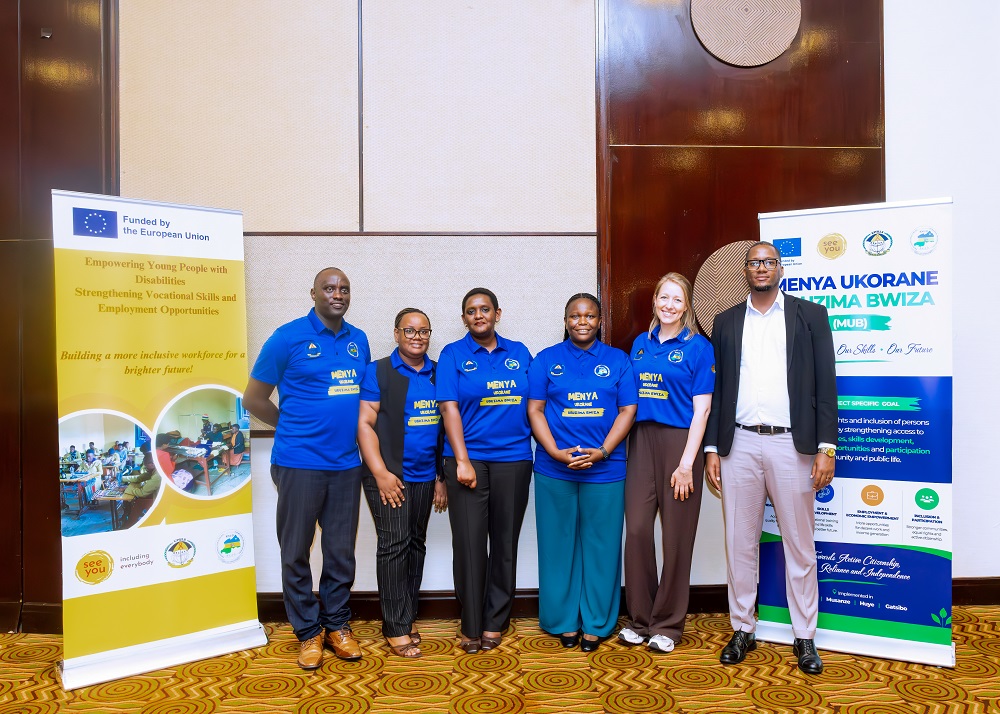
The project was implemented by UPHLS in partnership with the Rwanda National Union of the Deaf (RNUD) and Dutch organisation See You Foundation, with funding from the European Union (EU).
It aimed to strengthen the capacity of people with disabilities to engage in advocacy, equip young people with disabilities with vocational skills to improve their competitiveness in the labour market, and increase access to sexual and reproductive health information among women and girls with disabilities.
Beneficiaries from different districts said the project had helped them build confidence, recognise their abilities and contribute to the development of themselves, their families and the country.
They said the skills and knowledge acquired had helped them pursue income-generating activities, compete in the labour market and make informed decisions about their health.
MUB Project Manager Munezero Marie Médiatrice said one of the major challenges faced by people with disabilities was limited access to inclusive sexual and reproductive health information, alongside difficulties in accessing employment.
To address these challenges, MUB worked with health facilities, vocational training schools and other partners to train service providers on how to receive and serve people with disabilities in an inclusive manner, including through the use of sign language.
“We worked with health facilities to assess whether people with disabilities could access services in a way that was convenient for them. We first looked at the information they had and the challenges they faced, with the aim of jointly finding solutions,” Munezero said.
She said the project also sought to reach women and girls with disabilities and train some of them to become peer educators who could help others access sexual and reproductive health information.
UPHLS Executive Secretary Karangwa François Xavier said the priority after the three-year project was to sustain and expand the achievements to other districts.
“This meeting is aimed at discussing the achievements of the project on all fronts, particularly from the perspective of the people it was designed to serve. We are also thinking about how to sustain what has been achieved, build on it and extend it to other districts that we were unable to reach,” he said.
See You Foundation representative Niska Stoker thanked the people with disabilities who participated in the training for their commitment and encouraged them to put the knowledge they acquired to use.
“I have appreciated your commitment to the professions you are now pursuing, and I wish you success as you put the knowledge you have gained into practice, use your abilities, improve your lives and demonstrate change,” she said.
Project data shows that 37 percent of the people with disabilities reached by the project had secured jobs, mainly in private companies or through self-employment, while 7 percent remained unemployed.


Loading comments...
Leave a comment