



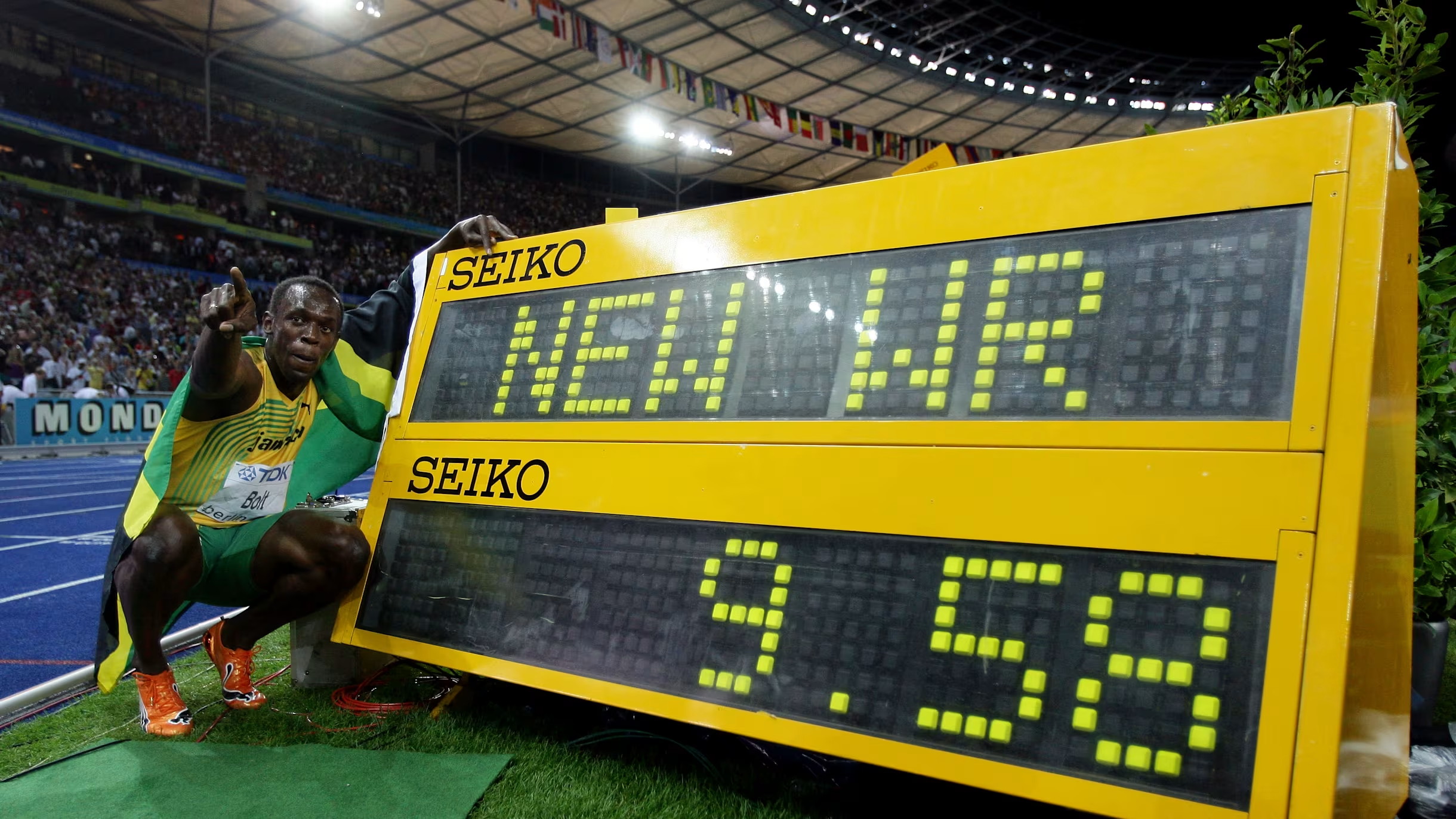
The robot, Tiangong Ultra, completed the 100-meter sprint in 9.39 seconds during the World Humanoid Robot Games in Beijing on Saturday. The time was 0.19 seconds faster than Bolt’s human world record of 9.58 seconds, set at the 2009 World Athletics Championships in Berlin.
Tiangong Ultra, developed by the Beijing Humanoid Robot Innovation Center, initially fell behind during the race before overtaking Lightning, a humanoid robot produced by technology company Honor, in the final stretch. Lightning finished second in 9.47 seconds.
The performance came after an even faster preparation run by Lightning, which Chinese state media reported completed the distance in 9.32 seconds. The robot reached a peak speed of 14.5 meters per second during the run.
The robots' performances were a dramatic improvement from last year's competition. Tiangong Ultra completed the 100-meter race in 21.50 seconds during the inaugural World Humanoid Robot Games, meaning its latest official time represents a major gain in speed.
The race also demonstrated some of the challenges still facing humanoid robots. After crossing the finish line, Tiangong Ultra became unstable and veered to one side, forcing nearby spectators to move away. Lightning also fell after completing the race and had to be removed from the track on a stretcher.
The sprint was among 51 events being contested at this year's World Humanoid Robot Games at Beijing's National Speed Skating Oval. The competition features events including football, dance, long jump, weightlifting and industrial tasks.
More than 2,000 robots are taking part, with 2,056 robots from 666 teams representing 16 countries and six continents participating in this year's games. The number of participating teams has risen sharply from 280 in the first edition.
Robots are also making an impact in other athletic events. One humanoid robot cleared 2.88 meters in the standing high jump, exceeding Cuban athlete Javier Sotomayor's 2.45-meter human world record set in 1993.
Lightning also won the humanoid robot half marathon, finishing in 50 minutes and 26 seconds. The robot stands 1.69 meters tall, and researchers extended its leg length from 95 centimeters to 1.05 meters before the race in an effort to improve its performance.
The rapid progress comes as China continues to expand its position as a major producer of humanoid robots. The technology has also become a point of tension between Beijing and Washington. The Trump administration in July banned imports of humanoid robots into the United States, citing national security concerns.
China has rejected the U.S. restrictions. Foreign Ministry spokeswoman Mao Ning said Beijing opposed what she described as Washington's excessive use of national security arguments against Chinese companies, warning that protectionism could ultimately harm U.S. businesses and consumers.
The World Humanoid Robot Games will continue through Wednesday, as researchers and companies use the competition to showcase increasingly capable machines, and test how closely robots can replicate, and potentially surpass, human athletic performance.
Loading comments...
Leave a comment