



But there is much more to the experience than the famous one-hour encounter. Rwanda’s mountain gorillas form part of the wider Virunga Massif, a transboundary ecosystem shared with different countries, meaning some of their characteristics and behaviours are shared across the population.
This article focuses on Rwanda’s gorillas while celebrating the country’s conservation success, brought to life each year through Kwita Izina, its annual gorilla naming ceremony that has attracted global figures and conservation champions since its launch in 2005.
Rwanda is preparing to name 22 baby mountain gorillas during the 21st Kwita Izina ceremony on September 4, 2026, in Kinigi, Musanze District, bringing the number of gorillas named through the annual ceremony to 460.
Drawing on decades of field research in Rwanda’s Volcanoes National Park, including the long-running work of the Karisoke Research Center established by Dian Fossey, the Dian Fossey Gorilla Fund and other scientific studies, here are 10 fascinating things you may not know about Rwanda’s mountain gorillas.
1. They rarely drink water
Mountain gorillas get much of the water they need from the plants they eat, meaning they rarely need to drink from streams, puddles or other free-standing water sources.
A study of mountain gorillas in Rwanda and Uganda found that the vegetation they consume typically contains 60% to 90% water. In Rwanda's Virunga population, researchers observed gorillas drinking water on just 0.6% of observation days.
Interestingly, the study also found that gorillas drink more frequently as temperatures rise, suggesting that hotter conditions could increase their reliance on free-standing water.
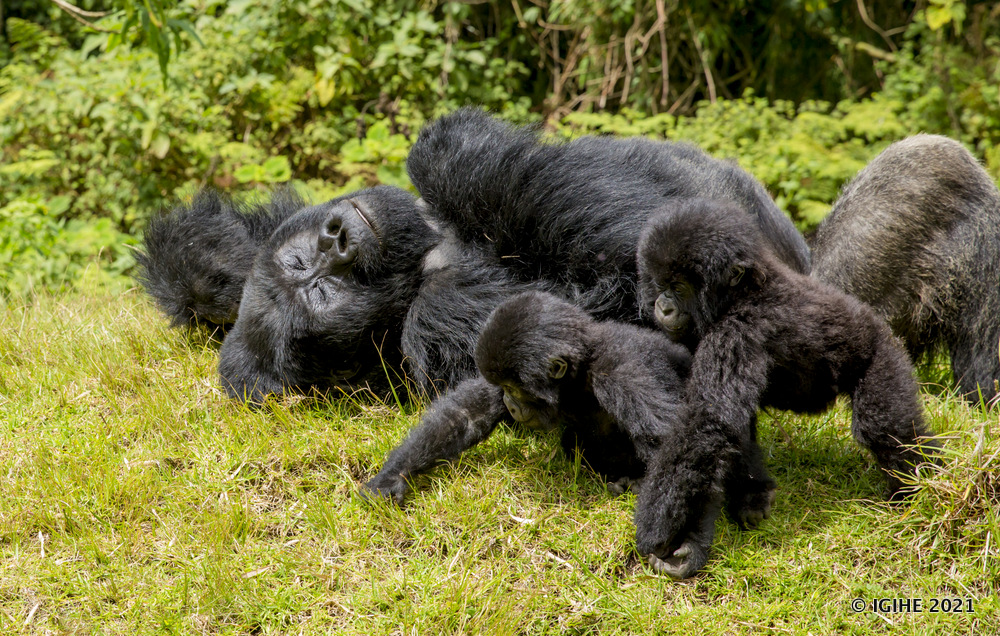
2. They can eat up to 30 kilograms of vegetation a day
Mountain gorillas spend a large part of their day feeding.
Tourism information show, an adult gorilla can consume up to about 30 kilograms of vegetation daily, including bamboo, leaves, stems and other plants.
3. Silverbacks are the leaders of their groups
The distinctive silver hair across an adult male's back is where the term silverback comes from.
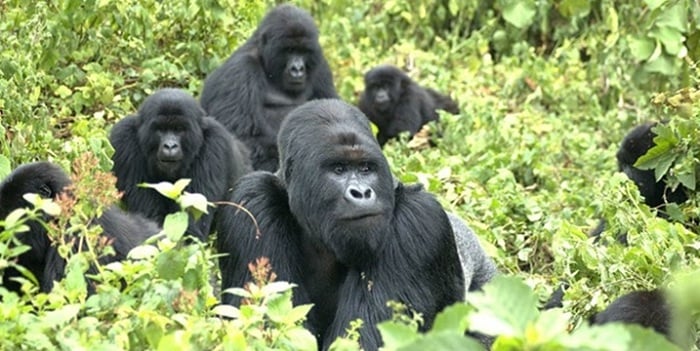
But a silverback is more than the most recognisable member of a gorilla family. Dominant silverbacks lead and protect their groups, while also playing an important role in maintaining social order.
Gorilla groups can also contain more than one adult male, making their social structures more complex than the typical image of a single male surrounded by females and young gorillas.
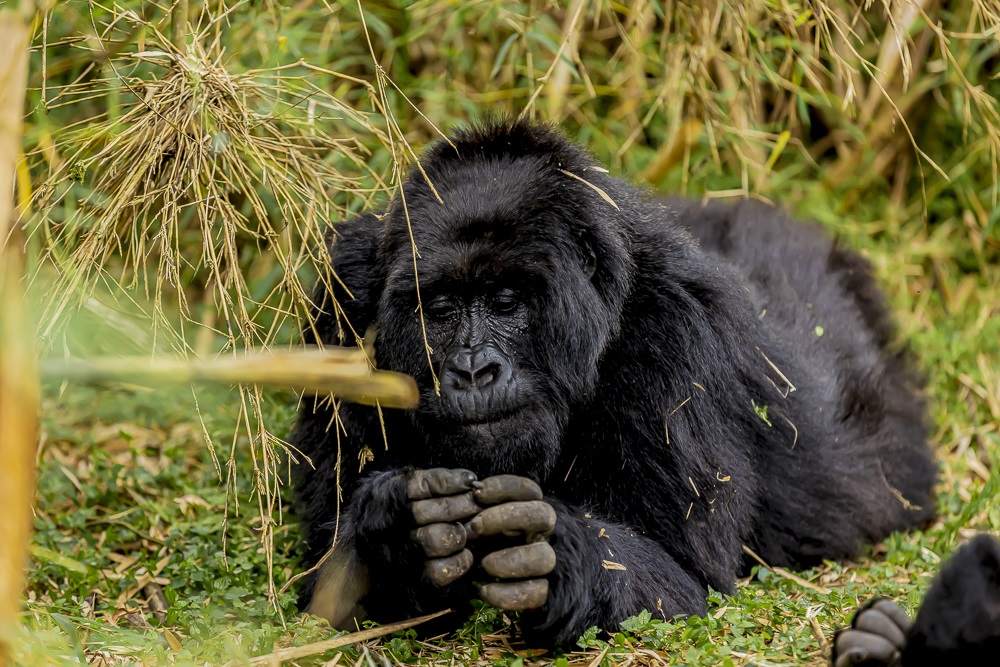
4. They build a new bed almost every night
Mountain gorillas do not have permanent sleeping quarters.
Instead, they construct nests from vegetation where they settle for the night. The nests are generally rebuilt regularly, meaning a gorilla family's sleeping place can change from one night to the next.
For trackers, these traces can also provide clues when following a group through the forest.
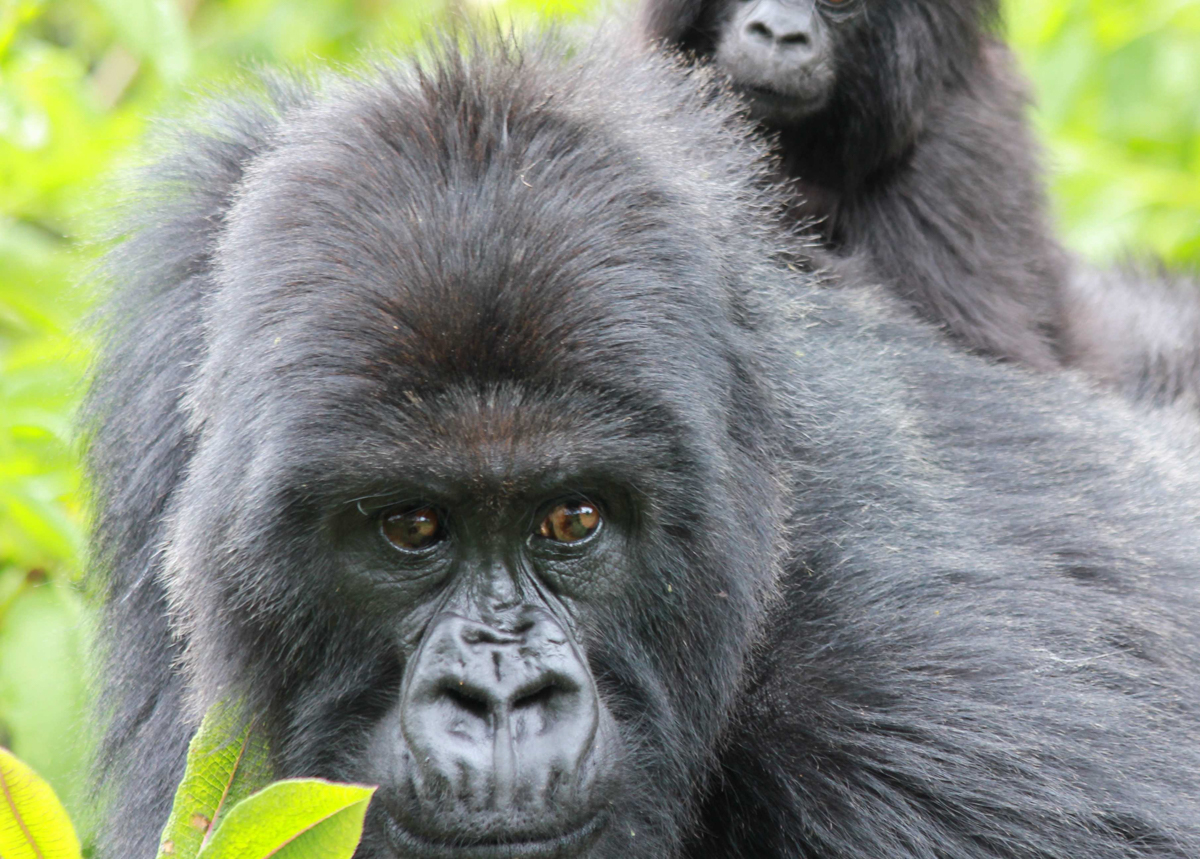
5. Gorilla babies are tiny compared with adults
An adult male mountain gorilla can weigh well over 100 kilograms, yet newborns weigh only around 2 kilograms.
Young gorillas remain highly dependent on their mothers during their early years and gradually become more independent as they grow.
For visitors, seeing an infant clinging to its mother or playing around other youngsters can be one of the highlights of a trek.
6. They communicate in more ways than tourists might expect
Gorillas communicate through vocalisations, body movements and other behaviours.
Chest beating, for example, is one of the behaviours most associated with gorillas, but it does not always mean aggression. Depending on the situation, it can form part of social communication or display.
Experienced trackers become familiar with the different behaviours of individual animals and groups.
7. They are remarkably close to humans
Mountain gorillas share more than 98% of their DNA with humans, according to Rwanda's tourism information.
That biological connection is reflected in behaviours visitors can easily recognise; mothers caring for their young, juveniles playing and members of a group interacting with one another.
It is part of what makes watching them feel so strangely familiar.
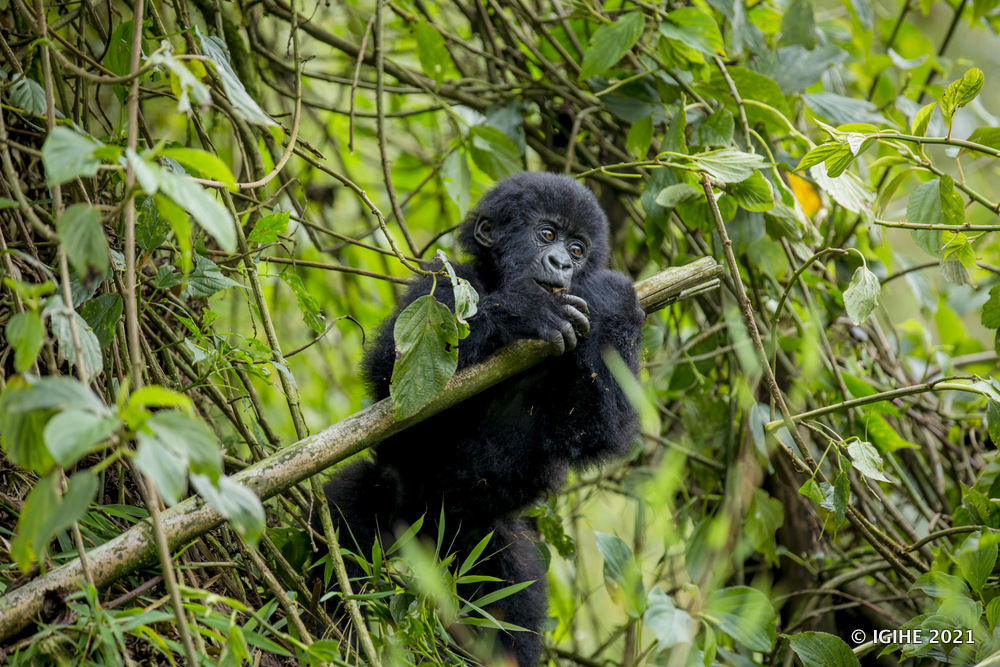
8. The gorillas tourists meet are still wild animals
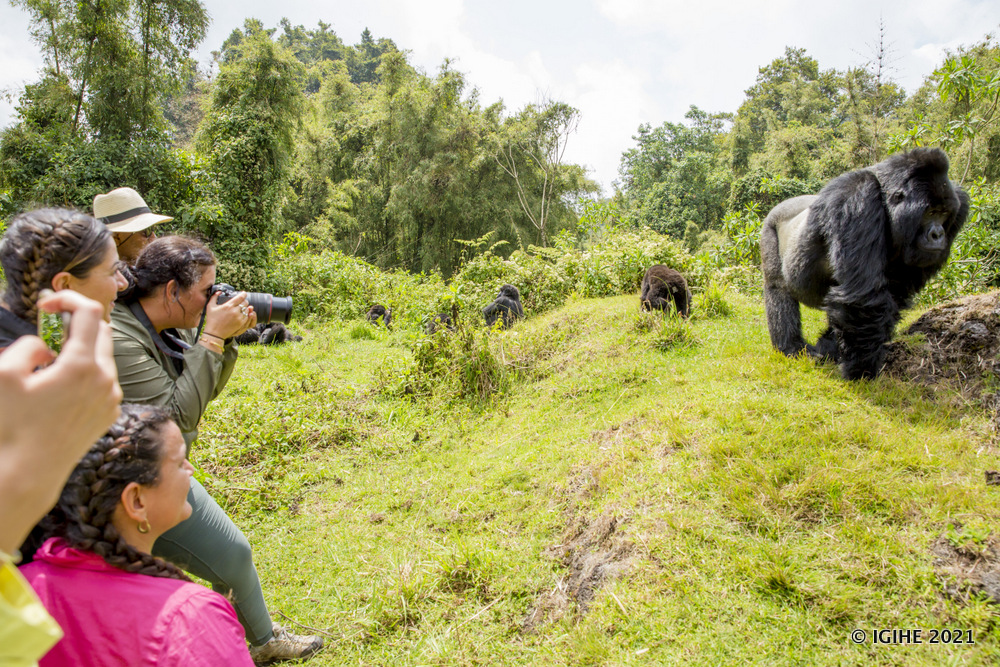
The gorillas available for trekking have been habituated to the presence of humans, but they remain wild animals living in their natural habitat.
Rwanda therefore limits encounters to one hour, helping reduce prolonged human contact and disturbance.
Visitors are also required to follow strict rules during the encounter, making the experience as safe as possible for both people and gorillas.
9. Gorilla tourism has become a major part of Rwanda's tourism story
Gorillas are not only a wildlife attraction; they are central to Rwanda's tourism brand.
In 2025, Rwanda's tourism sector generated a record $685 million, up from $647 million in 2024, while receiving about 1.49 million visitors.
RDB says the growth was supported in part by gorilla trekking and experiences in the country's national parks.
The country is targeting $1.1 billion in annual tourism revenue by 2029, underlining the importance of high-value experiences such as gorilla trekking.
10. Tourism money is also reaching communities around the gorillas
One of the less visible sides of gorilla tourism is what happens beyond the forest.
Rwanda's Tourism Revenue Sharing Programme allocates 10% of national park revenues to communities living around protected areas.
Since its creation in 2005, the programme has supported projects including schools, health facilities, water infrastructure and livelihood initiatives.
By 2025, RDB reported that more than Rwf 18 billion had been invested in more than 1,000 community projects through the programme.
This means that the value of a gorilla trek extends beyond the visitor and the animal. The tourism generated by the forest can also contribute to the communities living closest to it.
Beyond the gorillas, there is even more to discover. A trek in Volcanoes National Park can be the beginning of a longer Rwanda adventure, with visitors able to add Big Five safaris and boat trips in Akagera National Park, forest experiences in Nyungwe, or relaxing escapes around Lake Kivu.
With the help of local tour operators and guides, travellers can combine these experiences into a longer itinerary and discover why Rwanda offers much more than its famous mountain gorillas.
Loading comments...
Leave a comment